A rough guide by age
These are rules of thumb, and children vary enormously. A child who loves puzzles will outgrow this table quickly.
| Age | Typical size |
|---|---|
| 2-3 | Up to about 12 large pieces |
| 4-5 | About 24 to 48 pieces |
| 6-8 | About 60 to 100 pieces |
| 9-12 | About 100 to 300 pieces |
| Teens and adults | 300 to 1,000 pieces and beyond |
What each size feels like
- Under 100 pieces - a coffee break. Good for a first puzzle, a tired evening, or doing together with a small child.
- Around 250-500 - an evening. Big enough to need a plan, small enough to finish in one sitting.
- 1,000 - the classic adult puzzle. Usually several sessions over a few days, and the size most people mean when they say "a proper jigsaw".
- 2,000 and up - a project. Plan for a week or more, and a table you will not need.
Time varies hugely with experience and with the picture, so treat any number of hours as a guess.
Why the picture matters as much
A 500-piece puzzle of a busy street market can be easier than a 300-piece puzzle of a calm sea. What makes a puzzle hard is how much of the picture looks the same:
- Easier: lots of distinct objects, strong colours, text, clear edges between areas.
- Harder: sky, water, snow, grass, out-of-focus backgrounds, repeating patterns.
That is also why your own photos make good puzzles. A street you walked down, faces you know and a sign you remember give you far more to work with than a stranger's landscape. Choosing a photo with plenty of detail makes a big puzzle feel friendlier.
Mixed ages at one table
Families often get this wrong in both directions: a puzzle so easy the adults drift off, or so hard the children give up. Two things help:
- Pick a picture with a clear area for each person - the sky for one, the boat for another, the people for the youngest.
- Go a little smaller than the adults would choose on their own. Finishing together is the point.
Turning up the challenge
Once a size feels easy, there are other ways to make it harder than adding pieces: allow the pieces to rotate, hide the picture on the box, or pick an image with a big area of one colour. Strategies for those are in jigsaw puzzle tips.
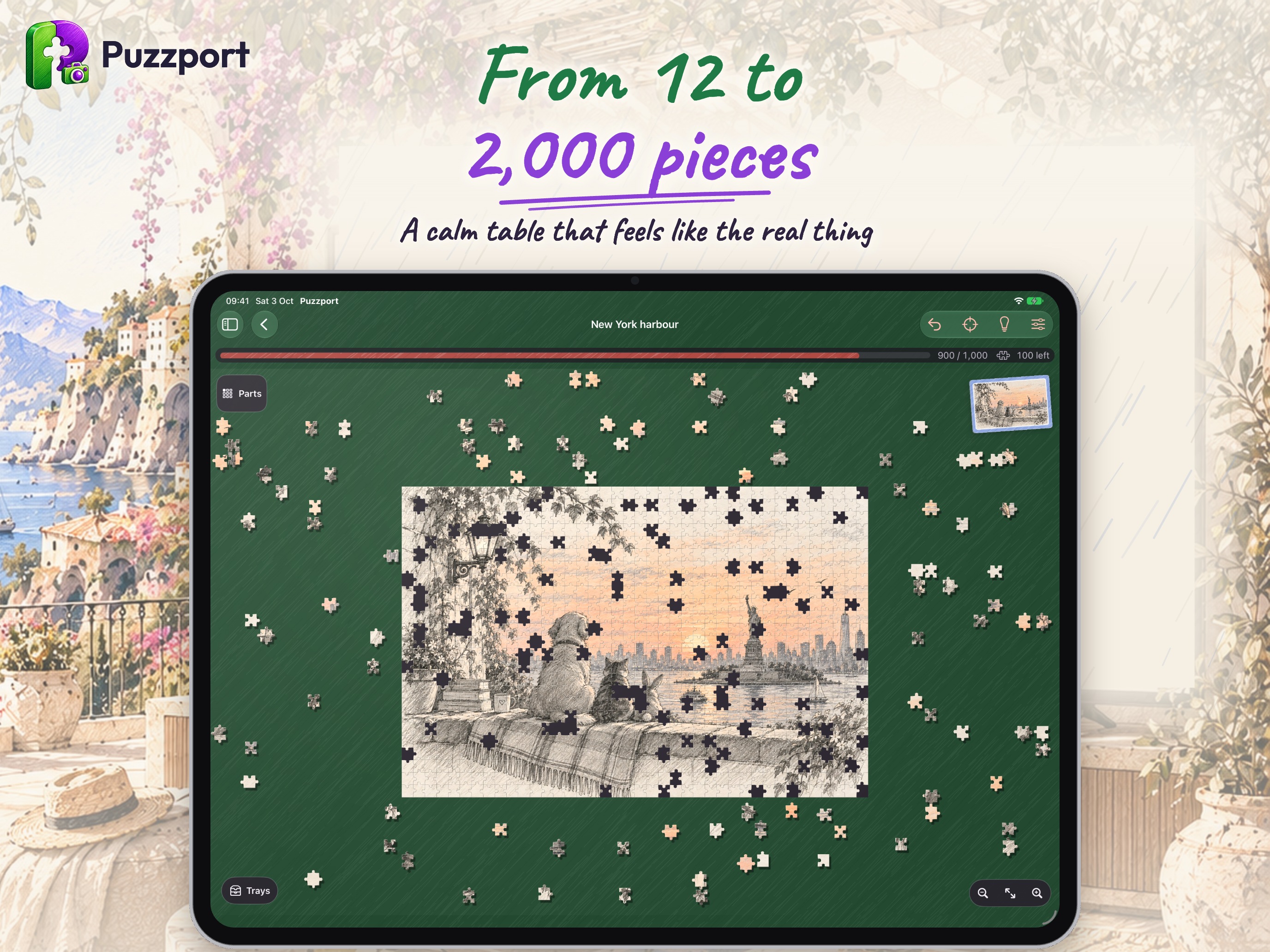
Puzzport lets you pick the size of every puzzle you make from your photos: up to 64 pieces in the free version, 100 to 1,000 with Puzzport Pro, and up to 2,000 on Mac and the larger iPads - with rotating pieces if you like a challenge.