A map, cut along the borders
In the 1760s a London engraver and mapmaker called John Spilsbury pasted a map onto a thin sheet of mahogany and cut it into pieces along the borders of the countries. Children - and the wealthy families who could afford such a thing - put the world back together and learned its shape on the way.
He called them "dissected maps", and he made them of the world, of Europe, and of the individual countries. For decades that is what puzzles were: an educational toy, hand-cut, expensive, and mostly about geography.
Where the name came from
The pieces were cut with fine saws, and later with treadle-powered fretsaws. The word "jigsaw" for those saws came into use in the late nineteenth century, and by the early twentieth century the puzzles cut with them had taken the name. The puzzles themselves are almost never cut with what we now call a jigsaw.
Why the pieces started to lock
Early puzzles had no picture on the box and pieces that simply sat next to each other along straight or wavy lines. Knock the table and the whole thing came apart. Around the start of the twentieth century, makers began cutting pieces that interlock, so a finished section could be picked up and moved. Some adult puzzles of that era added "whimsies" - pieces cut in the shape of animals, letters or everyday objects - which collectors still look for.
At the same time, puzzles for grown-ups became a society fashion. Without a picture to work from, they were genuinely hard.
The Depression craze
Puzzles became truly popular in the 1930s. Die-cutting made cardboard puzzles cheap, and during the Great Depression they offered hours of entertainment for very little money. Newsstands sold a new puzzle every week, shops rented them out like library books, and companies gave them away as advertising.
The appeal has not changed much since. A puzzle asks for nothing but attention, rewards it steadily, and ends in a picture you made whole yourself.
Back to the map
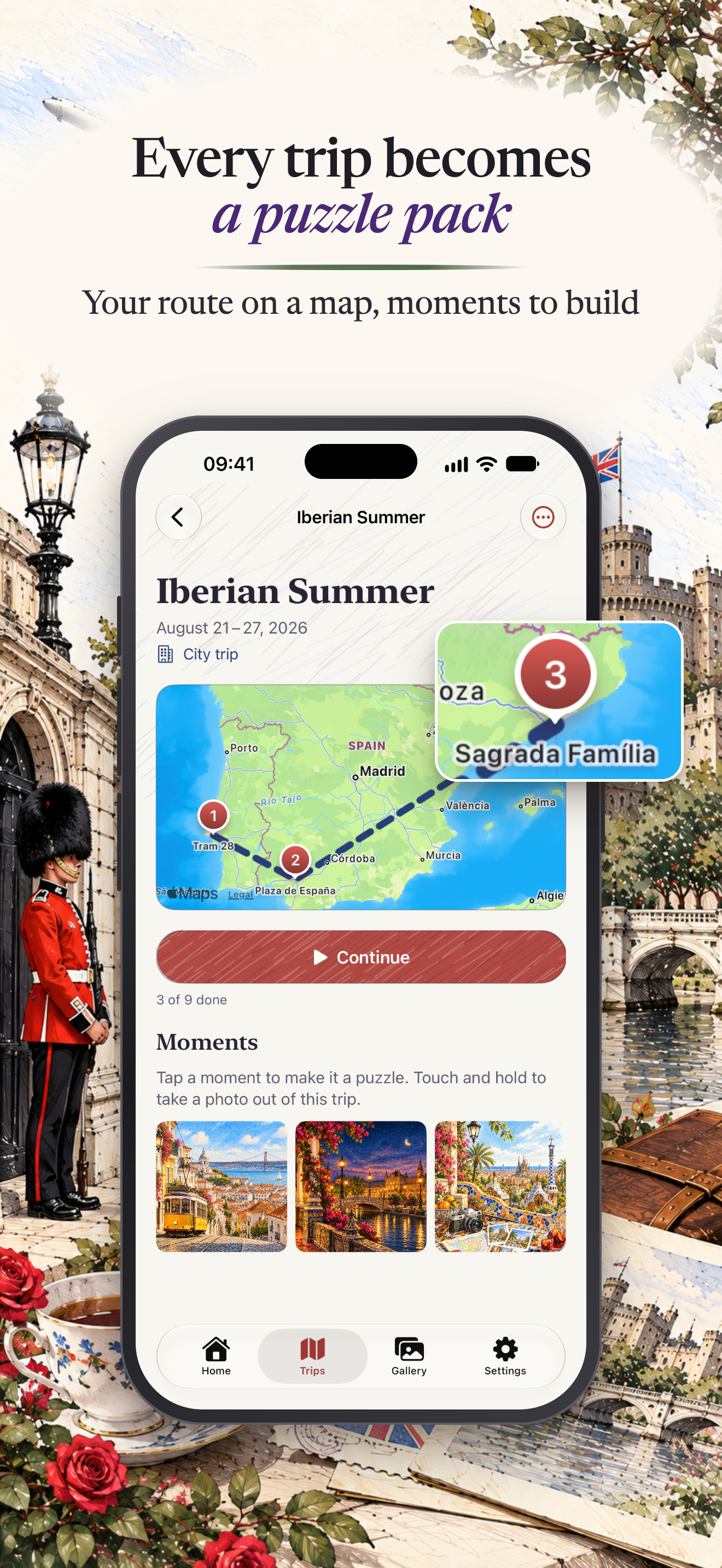
It is a nice coincidence that one of the newest ideas in puzzles goes back to the first one: using the puzzle to remember a place. Puzzport turns the photos from your own trips into jigsaws, follows them with questions about where each one was taken, and ends by lighting up your route on the map.