A quiz with a mixed-age group has one design constraint above all others: everybody has to be able to answer something. Get that right and the rest is detail.
Difficulty, and the mistake everyone makes
The instinct is to pitch questions at the middle. That produces a quiz where the same two people answer everything and the rest watch.
What works better is deliberate spread within each round - a couple of questions a child will get, a couple aimed at whoever knows about music, one genuinely hard. Everyone contributes something, and nobody spends ten minutes with nothing to offer.
The specific thing to avoid is a whole round of one difficulty. A hard round loses the youngest players entirely; an easy round bores everyone else. Mixing within the round keeps the whole table engaged for its duration.
Length: shorter than you think
Rounds of ten questions. Four or five rounds. Somewhere between forty minutes and an hour, total.
Nearly every home quiz runs too long, and the reason is that the host is enjoying it more than the players. Attention drops off sharply after about fifty minutes, and a quiz that finishes while people still want more is remembered better than one that ran until everyone had left the room.
Teams, not individuals
Individual play punishes the least knowledgeable person publicly, which for a child at a table of adults is not fun.
Pairs or small teams fix this: discussion becomes part of the game, a child on a team of two contributes without being exposed, and the arguing about answers is frequently better than the answering.
Balance the teams deliberately rather than letting people choose. The two people who know the most will otherwise end up together and the game is over before it starts.
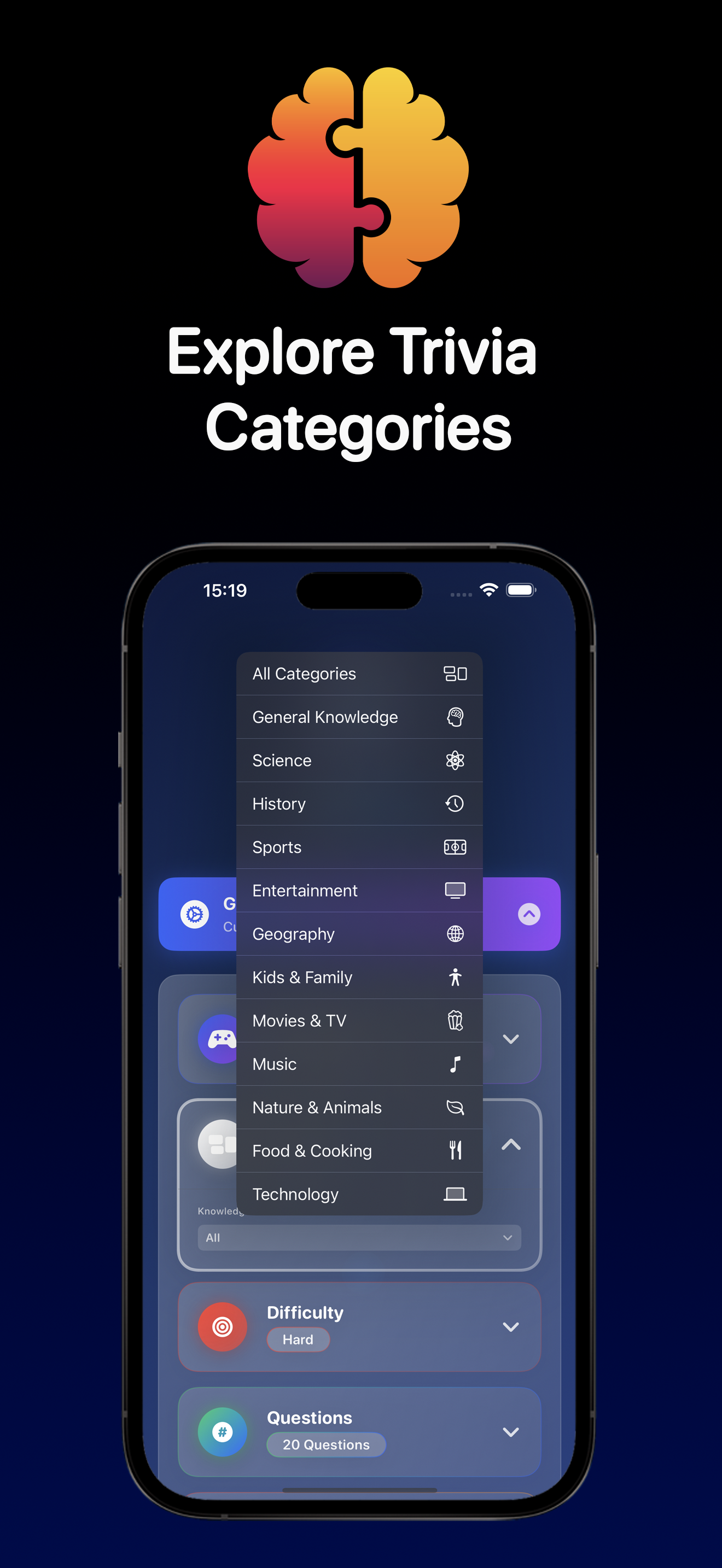
Categories that work at a mixed table
- Picture rounds. Logos, landmarks, film stills. Visual recognition is much less age-dependent than factual recall.
- Music intros. Split across decades so everyone gets a few.
- "How many" estimation. Nobody knows the answer, so everyone can guess, and closest wins. The great equaliser.
- Family questions. Who was born in which town, whose car was which colour. Unbeatable engagement and impossible to prepare for.
- Anything current. The category where children reliably beat adults, which is worth including for the pleasure of it.
Categories to be careful with: history and geography skew heavily to adults, and "general knowledge" usually means the host's own interests.
Put the questions on a screen
The single biggest practical improvement, and it costs nothing.
A host reading from a phone has to repeat every question twice, cannot play, and becomes a bottleneck. A question displayed on the television is read once, at everyone's own pace, by everyone at the same time - including the person who did not quite catch it.
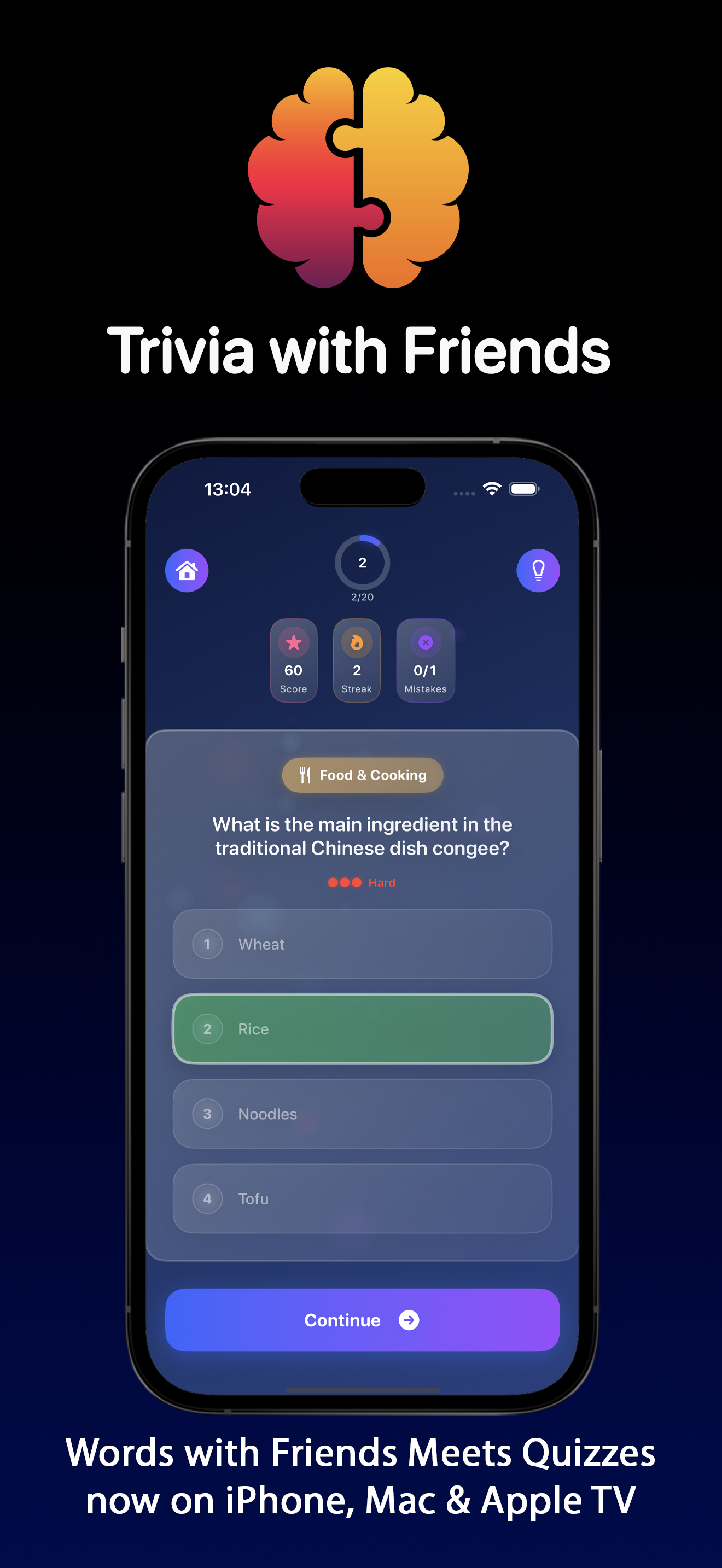
It also removes the accidental-tell problem, where the host's tone gives away the answer. Family Trivia runs on Apple TV for exactly this, with mixed categories and difficulty.
Scoring: keep it visible and simple
One point per question. No bonuses, no doubles, no negative marking. Complicated scoring produces arguments and slows the game to a crawl.
Write the running total somewhere everyone can see. A quiz where nobody knows the score until the end loses its tension in the middle, which is exactly where it needs it most.
One exception worth having: a final round where teams wager some of their points. It gives a trailing team a genuine route back, which keeps everyone playing to the end rather than conceding at round three.
The practical bits people forget
- Decide the tiebreak in advance. Usually an estimation question. Deciding it afterwards always feels arbitrary.
- Have the answers written down. Half-remembered answers cause the longest arguments of the evening.
- Give a two-minute break between rounds. People need to refill glasses, and it stops the whole thing feeling like an exam.
- A prize helps, and it should be small. A chocolate bar works exactly as well as anything expensive and keeps the tone right.
The shape that reliably works
- Round 1: general mix, easy, to get everyone in.
- Round 2: pictures.
- Break.
- Round 3: music.
- Round 4: family questions.
- Round 5: estimation, with wagers.
An hour, five rounds, everybody answers something in each. The design does the work, and the host gets to play too.