Frequently asked questions
Does it need my exact birth time?
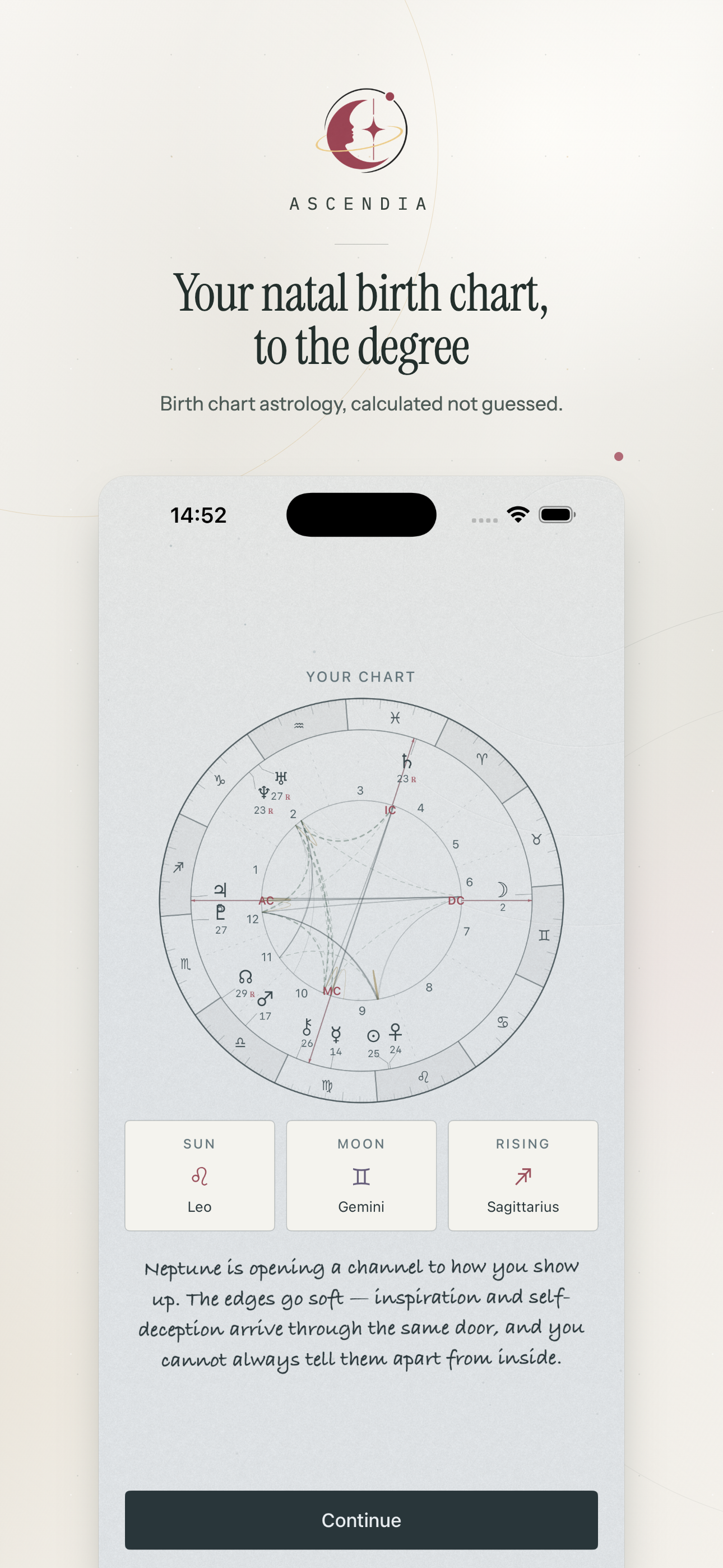
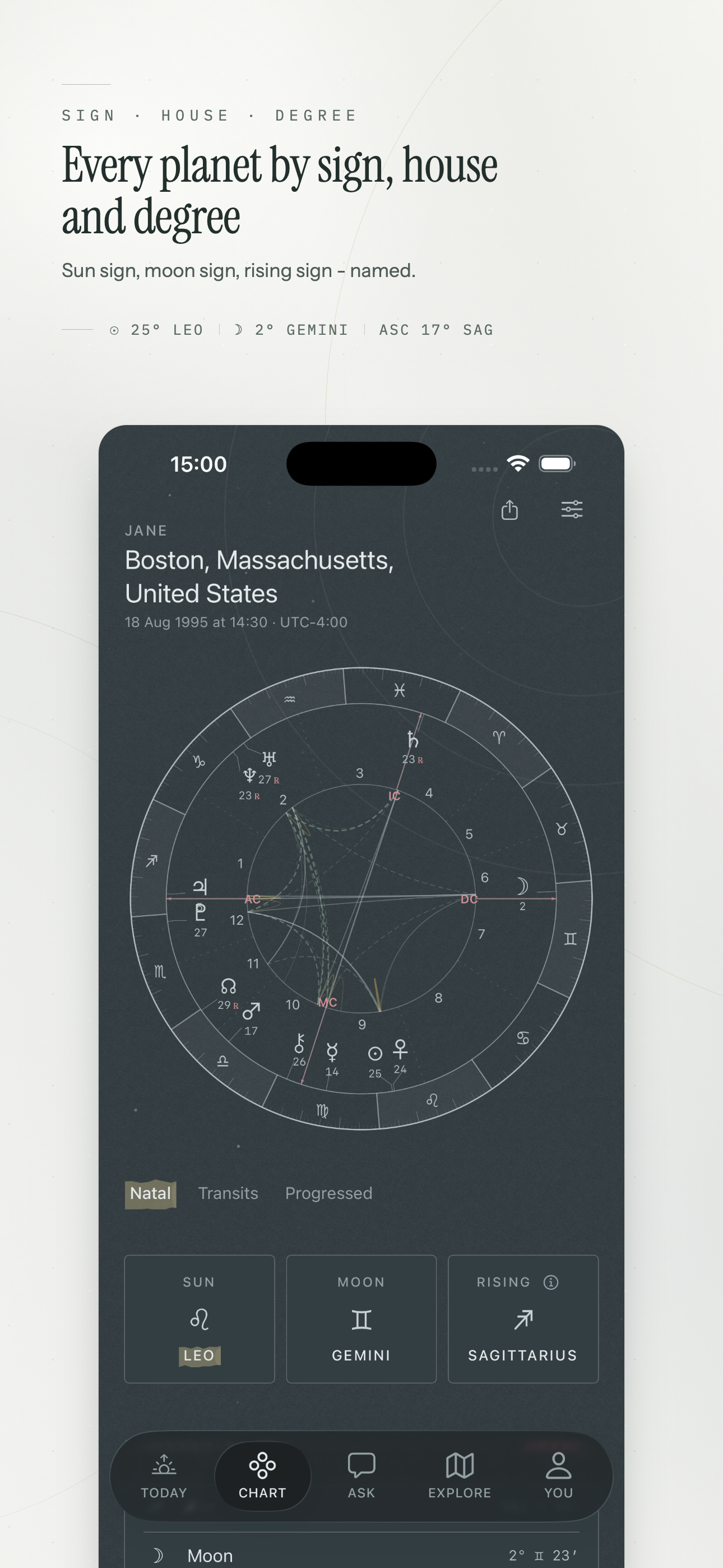
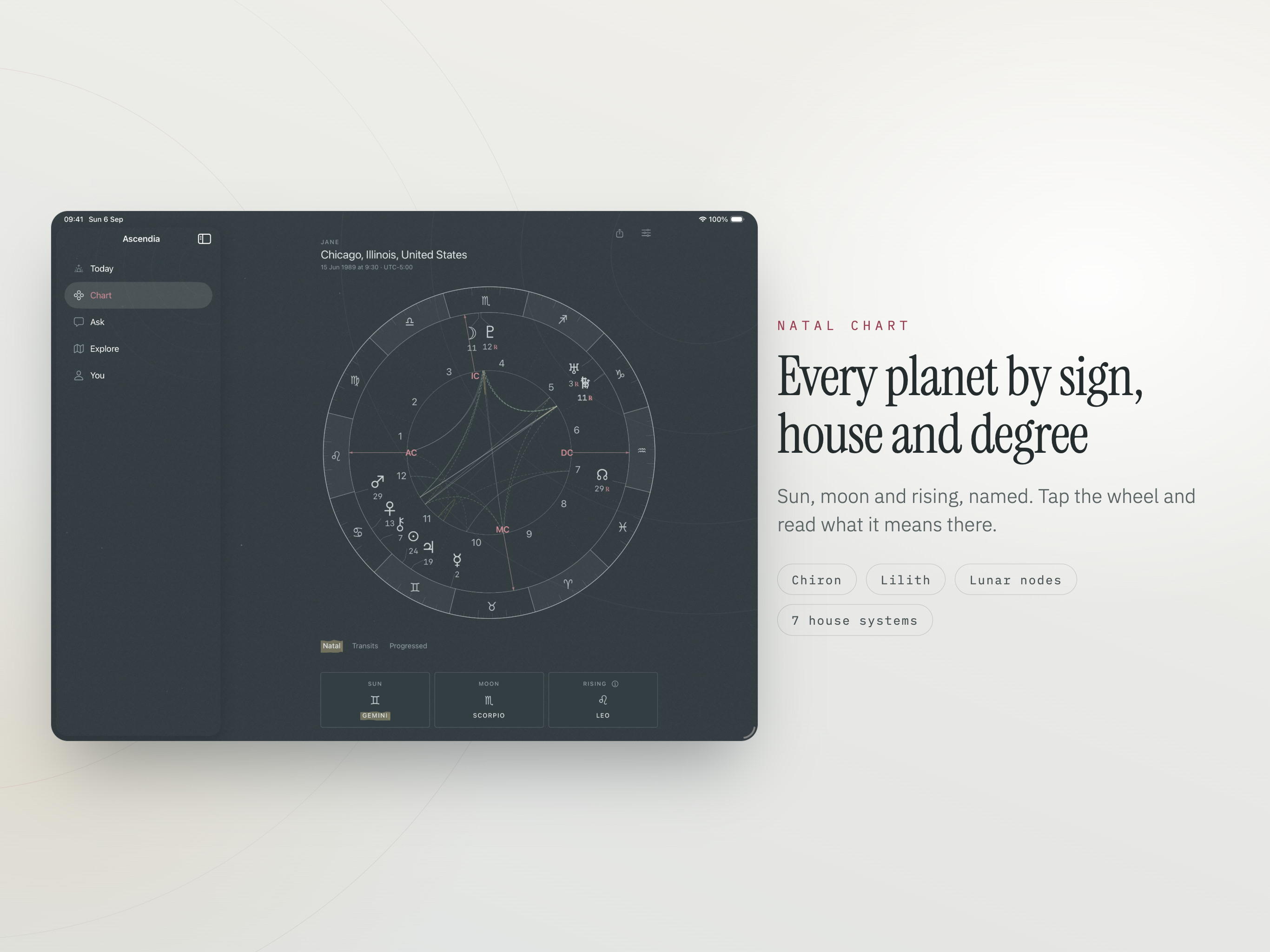
For the full chart, yes - the Ascendant moves about a degree every four minutes, so the houses depend on it. Without a time you still get every planet by sign; if the time is missing entirely, the rectification tool works backwards from events you can date.
Do I have to adjust for daylight saving myself?
No, and adjusting by hand is the usual cause of a chart that lands an hour out. Historical time zones and wartime clock rules are resolved for the date and place you enter, so a 1943 birth in a small town comes out correctly. Details on the Ascendia help page.
Which house systems are supported?
Placidus, Whole Sign, Koch, Equal, Porphyry, Campanus and Regiomontanus. You can switch between them and watch the wheel redraw, which shows you exactly which placements depend on the choice.
Is my birth data uploaded anywhere?
No. The ephemeris and the place database are inside the app, so everything is computed on the device. Turn on Airplane Mode and cast a chart - it still works, which is the simplest way to check.
Which devices does it run on?
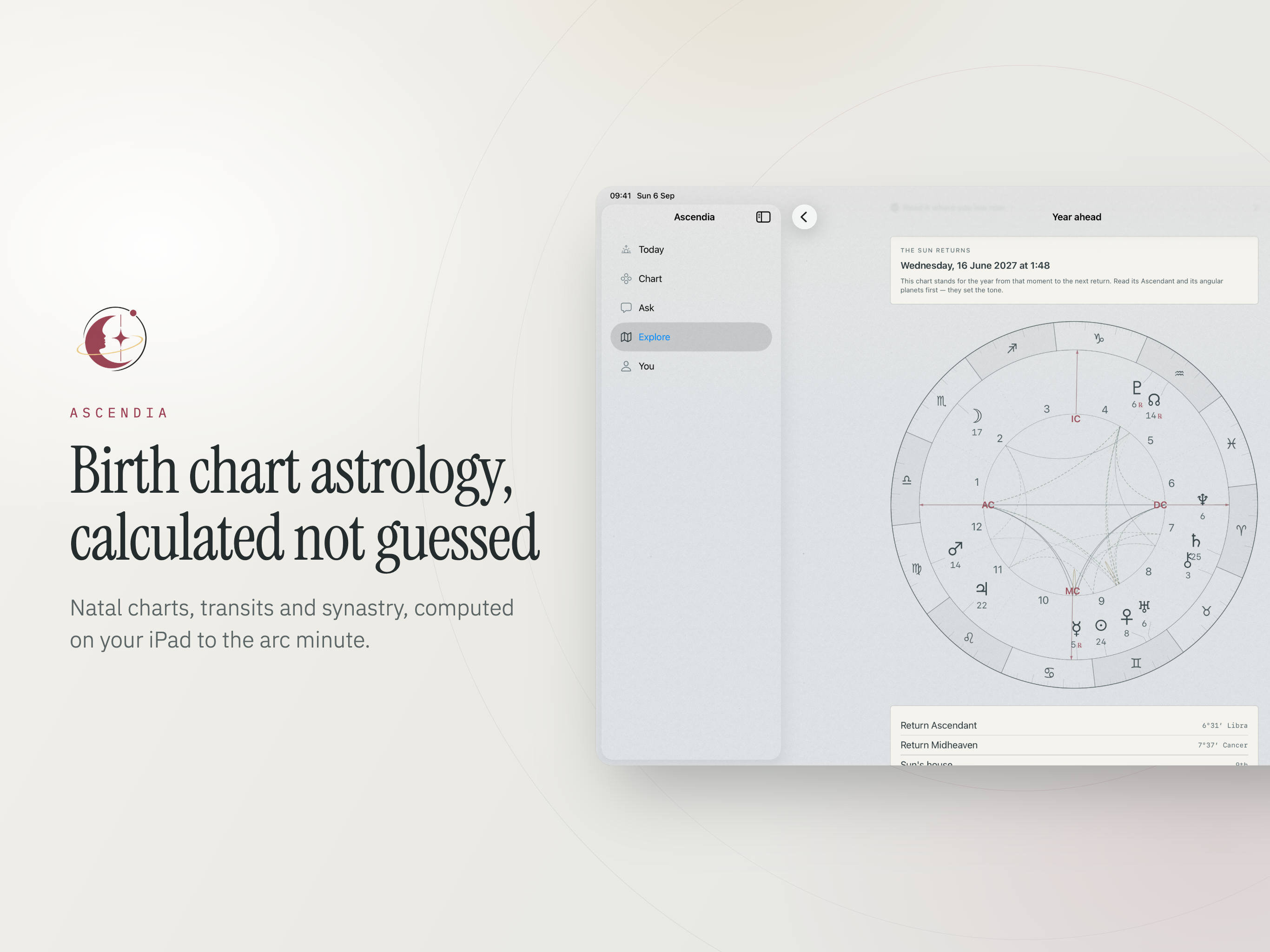
iPhone and iPad, on iOS 17 or iPadOS 17 and later.
Is any of this medical or financial advice?
No. Ascendia is for reflection, and it names the angle it is measuring rather than presenting a forecast. It is not a substitute for a professional you would otherwise consult.