There are two separate skills hiding under "knowing geography", and confusing them is why studying often fails.
Recall is naming the capital of Peru. It is a fact, it is isolated, and it decays quickly because nothing else in your head connects to it.
Spatial knowledge is being able to place Peru on a blank map, and knowing what is next to it. This one persists, because each piece is anchored to the pieces around it.
Learning lists builds the first. Practising with maps builds the second, and the second is what people actually mean when they say they want to know geography.
Why lists do not stick
A capital city memorised from a list has exactly one connection: to its country. Forget that one link and the fact is gone.
A country learned on a map has many - the coastline it sits on, the neighbours it touches, the shape of it, the fact that it is between two things you already know. Recall becomes reconstruction: you cannot remember where Paraguay is, but you know it is landlocked, south of Bolivia, west of Brazil, and that is enough to find it.
This is why building outwards from what you already know works so much better than working alphabetically. You know where France is. Learn its neighbours. Then their neighbours. The map grows from anchors rather than as a list of unconnected items.
The order that works
- Continents and oceans. Trivial, and it is the frame everything else hangs on.
- The twenty largest countries. They occupy most of the land, and they become the anchors for everything smaller.
- One region at a time, thoroughly. All of South America before starting Africa. Half-learning three regions leaves you with three vague areas; finishing one leaves you with one solid one.
- The awkward clusters last. Central Europe, West Africa, Central America, the Caribbean, the Gulf. Everyone finds these hard, because they are many small countries with no distinguishing coastline.
What makes practice stick
Retrieval, not review. Looking at a labelled map feels productive and does almost nothing. Trying to place a country, getting it wrong, and then being told - that is what forms memory. The effort of failing is the mechanism, which is why it feels less pleasant and works better.
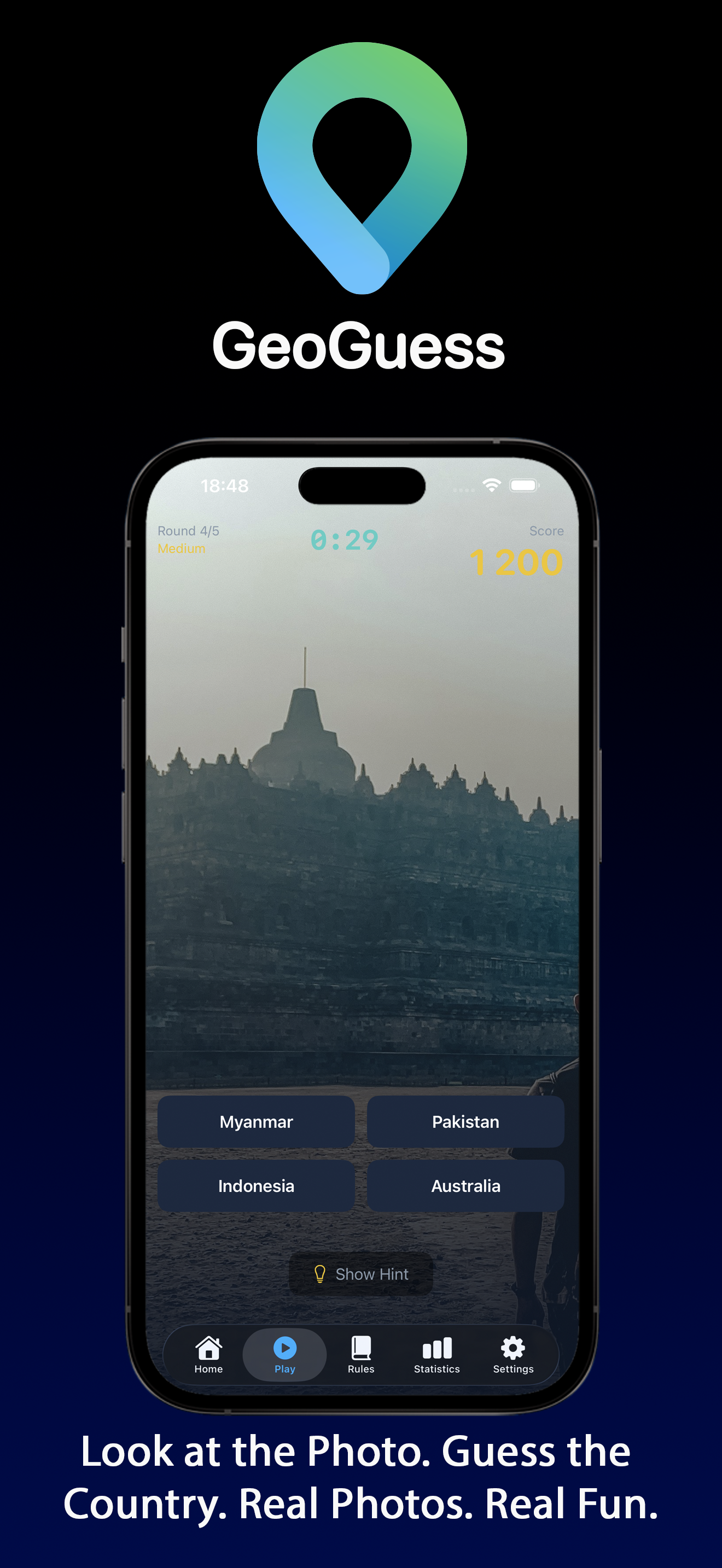
Immediate correction. The gap between guessing and finding out should be a second. Delayed feedback loses most of the effect.
Short and often. Ten minutes daily beats ninety minutes on Sunday by a wide margin. Spacing is the single best-evidenced finding in the memory literature.
Something that is actually enjoyable. Not a motivational point - a practical one. The method you use three times a week beats the better method you abandon after four days.
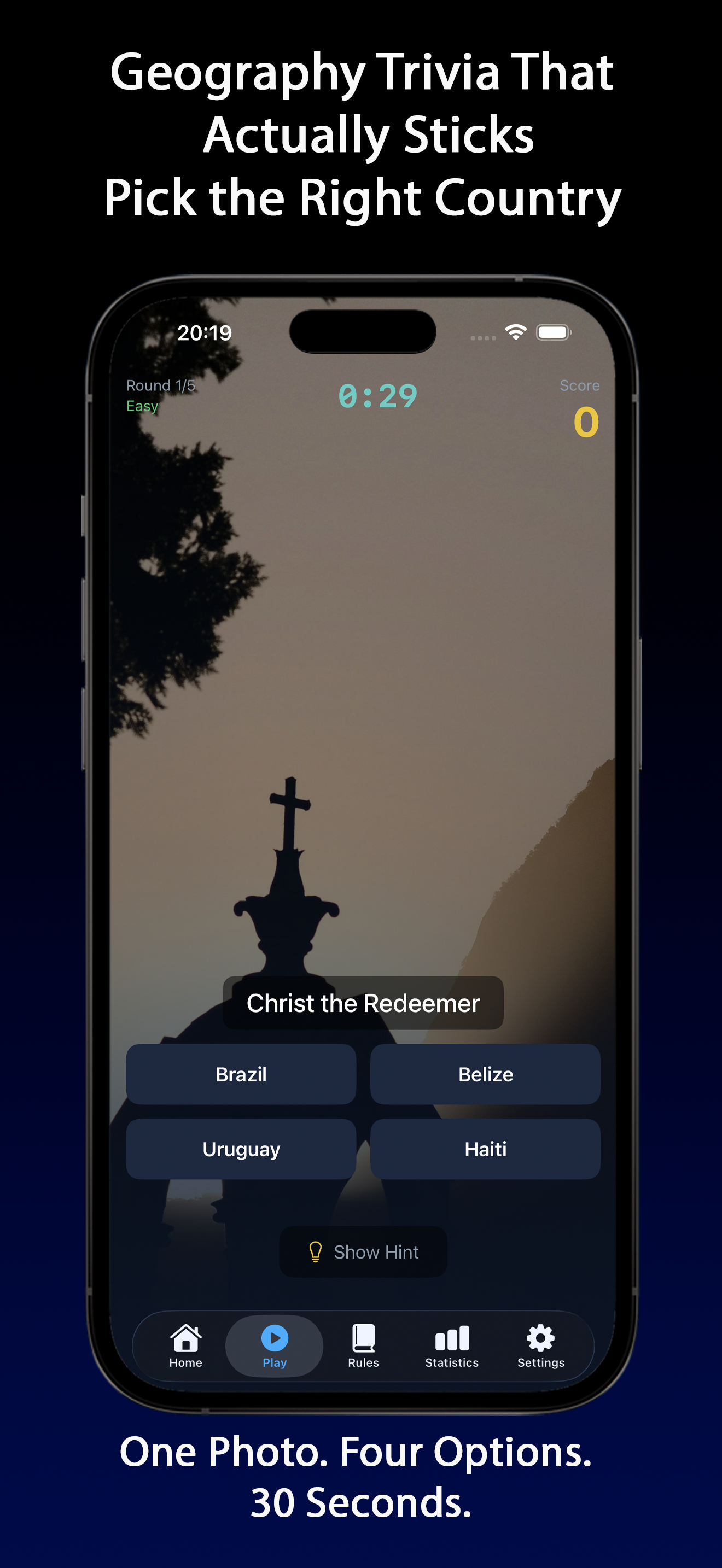
GeoGuess is built around that loop: a country to place, an immediate answer, the next one. It is a quiz format because quiz formats get repeated and flashcard decks do not.
The details that give countries away
Half of geography knowledge is pattern recognition, and nobody teaches it explicitly.
- Shape is a stronger cue than position. Italy, Chile, Norway and Japan are recognisable in silhouette, and shape survives longer in memory than coordinates.
- Colonial history explains language and borders. Straight lines on a map are almost always drawn by someone who was not there. It makes whole regions easier to reason about rather than memorise.
- Capitals sit on water more often than not. A river, a coast, a lake. If you cannot remember where a capital is, guessing the largest river is a surprisingly good heuristic.
- Flags cluster regionally. Pan-African, pan-Arab and Nordic colour schemes mean a flag often tells you the region before you know the country.
A realistic target
Ten minutes a day for a month gets most people from thirty countries to well over a hundred placed confidently. That is enough for news to stop being a series of unfamiliar names, which is usually the actual goal.
The full 195 is a different commitment, and the last forty are genuinely hard - small Pacific and Caribbean states with no neighbours to anchor them. Worth knowing before you start that the curve gets steep at the end, so you can stop somewhere useful rather than feeling you failed.