Fire is unusually well suited to being on a screen you are not watching, and it is worth understanding why, because it explains what separates a good fireplace video from an irritating one.
Continuous motion, no events. The eye wants movement and attention does not want a story. Flames move constantly and nothing ever happens, which is precisely the combination that reads as background.
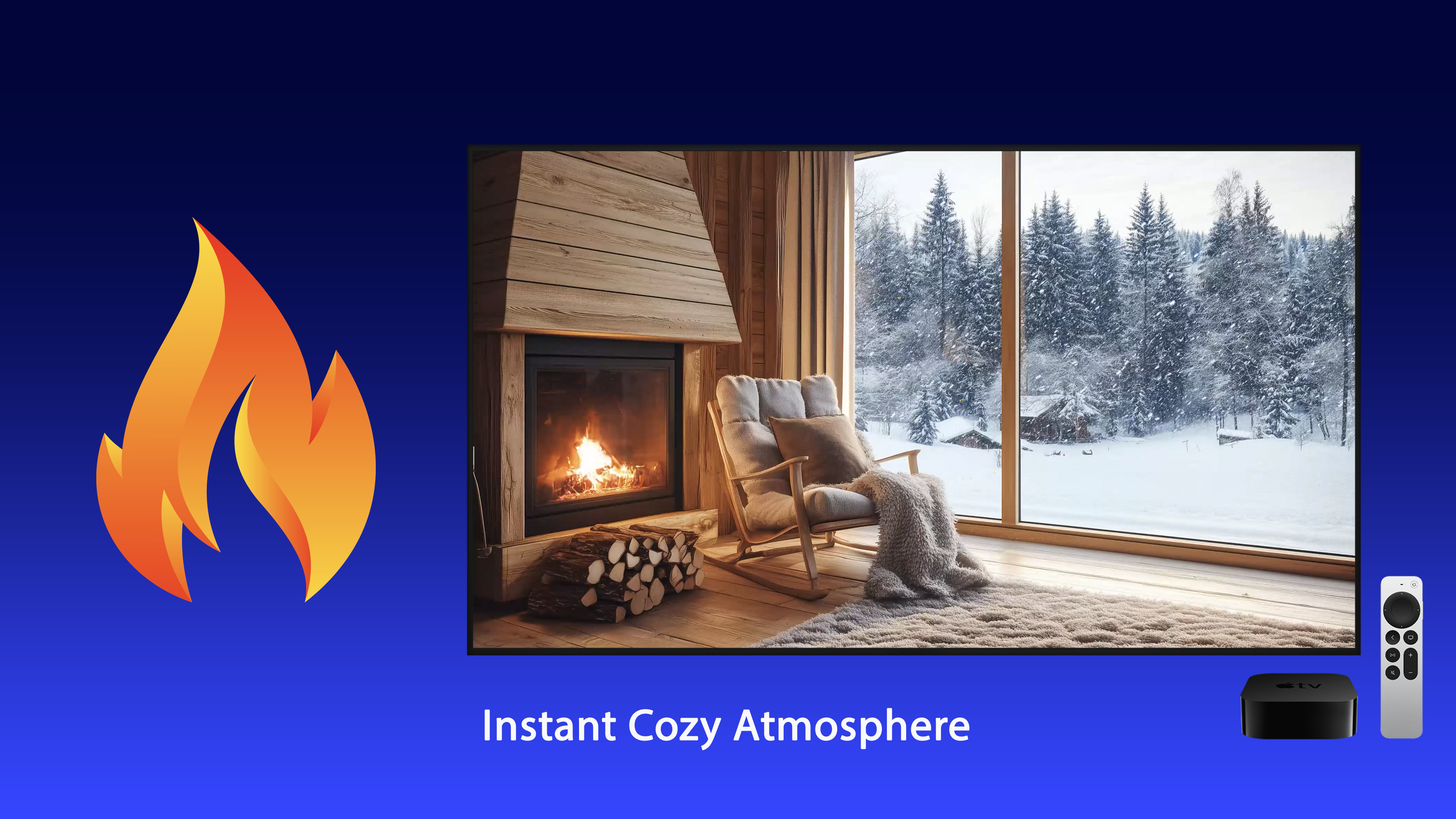
Warm, stable brightness. No cuts, no sudden dark or bright passages. A room lit partly by a screen showing fire feels lit rather than illuminated by a television.
It is what a room used to have. Most homes had a fire as the focal point for most of history, and the arrangement of furniture in a living room still assumes one. Putting something fire-shaped back in that position works on a level that has nothing to do with technology.
What separates a good one from a bad one
Loop length, above everything. Fire never repeats. A four-minute clip on a loop becomes obvious within half an hour - you start recognising a particular log collapse, and once you have noticed it you cannot stop noticing it. This is the single most common failing and it is rarely stated on a product page. If a listing does not say how much footage there is, assume the answer is not much.
Genuine 4K. Fire is one of the hardest subjects to compress: fine detail, constant motion, high contrast between flame and dark. Upscaled 1080p shows as mushy flame edges and blocking in the dark areas around the fire. On a large panel this is very visible.
Silence, or the right sound. Crackling audio is pleasant for about ten minutes and then becomes a noise you are living with. Most of these are better silent with your own music. If there is audio, it needs to be genuinely low and free of a repeating pattern - a crackle that recurs every ninety seconds is worse than nothing.
Settings on the television
Three, and they matter more for fire than for almost any other content.
Turn the brightness well down. A fire at shop-floor brightness looks like a bright orange rectangle. At low brightness in a dim room it looks like a fire. This one setting does most of the work.
Warm colour temperature. The warmest preset your set offers. Cool white makes flames look like video and warm makes them look like light.
Motion smoothing off. Interpolation on flames produces a strange plasticky flow that is hard to unsee once noticed.
The photo frame variation
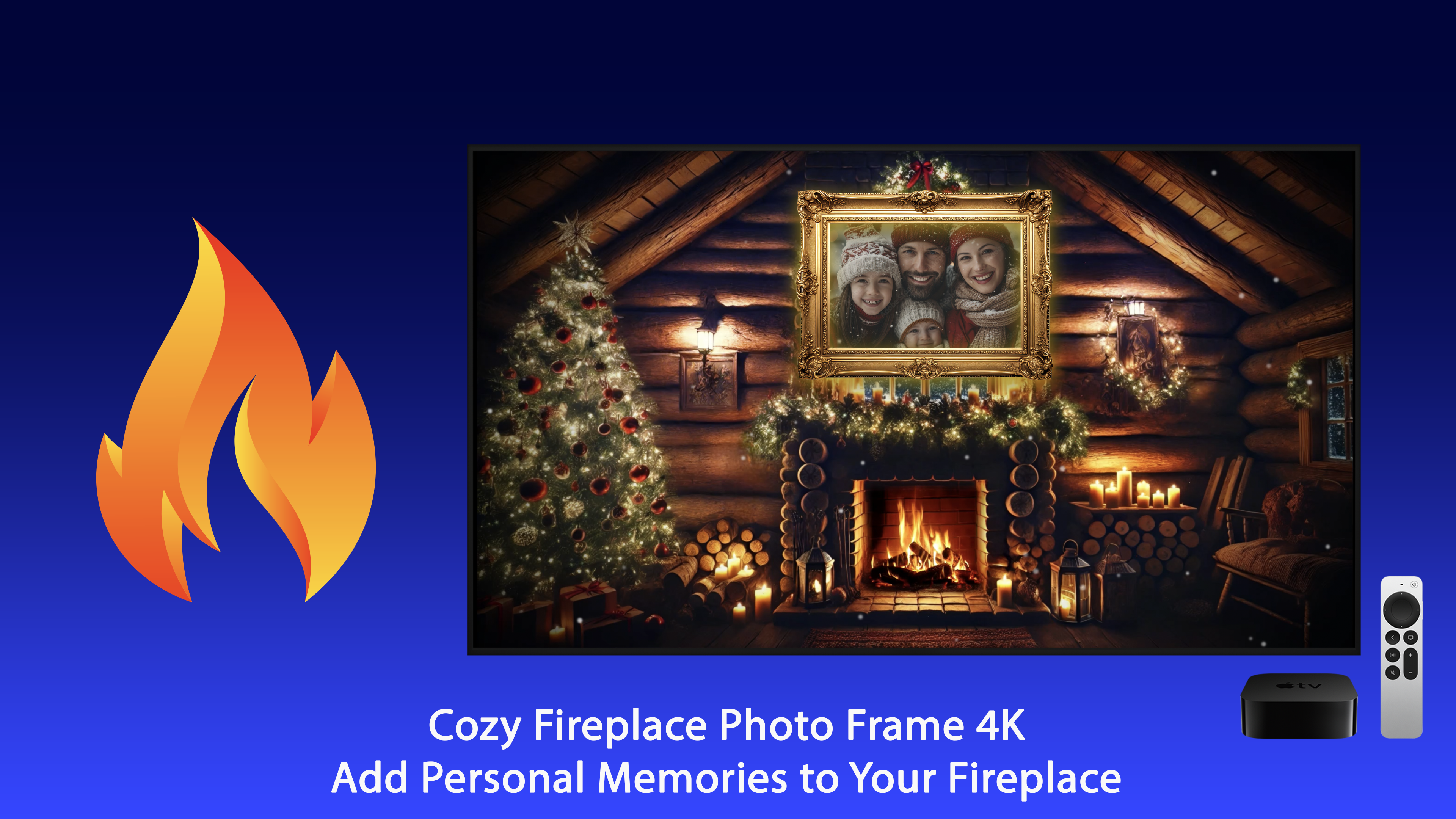
A version worth knowing about: fire around the edge of the screen with your own photographs in the middle.
It sounds like it should not work and does, particularly at Christmas with family in the room. The fire provides the ambient light and motion; the photographs give people something to notice and talk about. Cozy Fireplace does this on Apple TV.
The pacing rule from art displays applies here too: photographs should change every several minutes, not every twenty seconds. A slideshow demands attention; a picture that occasionally becomes a different picture does not.
Burn-in, briefly
On an OLED this is a reasonable question and fire is close to the best case. The image is in constant motion, no pixel holds maximum brightness, and there is no static overlay - which is what actually causes retention.
Run it at moderate brightness, avoid anything with a permanent clock or logo in the corner, and let the set do its maintenance cycle in standby rather than never powering off. On LED and QLED panels there is nothing to consider.
When it is right
Evenings with people in the room. Christmas, obviously. A dinner where the overhead light is too much. A winter afternoon that got dark at four.
When it is not: as a permanent daytime state, where it becomes wallpaper you stop seeing and the electricity is genuinely being wasted. The effect depends on being switched on deliberately - which is also true of a real fire, and probably part of why it works.
The wider question of what else belongs on a screen nobody is watching we covered in beyond the Apple TV aerials.