Transcribing your own meeting is easy because you were there. Transcribing someone else's is a different job: you do not know the voices, you do not know the jargon, and you cannot tell from the audio which of the four people speaking is the one whose commitment matters.
Start with the file, not the transcript
Check what you were actually sent. A phone recording from the middle of a table has one loud voice and three distant ones, and the distant ones are usually the people being asked questions. If there is a second recording from another device, it is worth having - a transcript from the better of two files beats an hour of correcting the worse one.
Formats matter less than people fear. m4a from a phone, mp3 from a recorder, the audio track of an mp4 from a video call - all of them transcribe. Converting first is usually a step that costs quality and gains nothing.
Do the speaker pass first
Separating voices and naming them is the step that changes the transcript from a wall of text into a document you can cite. Do it before reading the content properly, because once you start reading for meaning you stop noticing who is talking.
The practical trick with a recording you were not present for: find one place where somebody uses a name, label that voice, and work outwards. Introductions at the start, if there were any, are the fastest route.
Then read for the words machines get wrong
Recognition is reliable on ordinary speech and unreliable on exactly the parts you need: proper nouns, product names, numbers and acronyms. A figure that should be fifteen thousand and arrived as fifty thousand is the kind of error that survives into a summary and causes an argument three weeks later.
Read for those specifically, in one pass, before you read for content. It is faster than fixing them as you notice them.
Finding the part you were sent it for
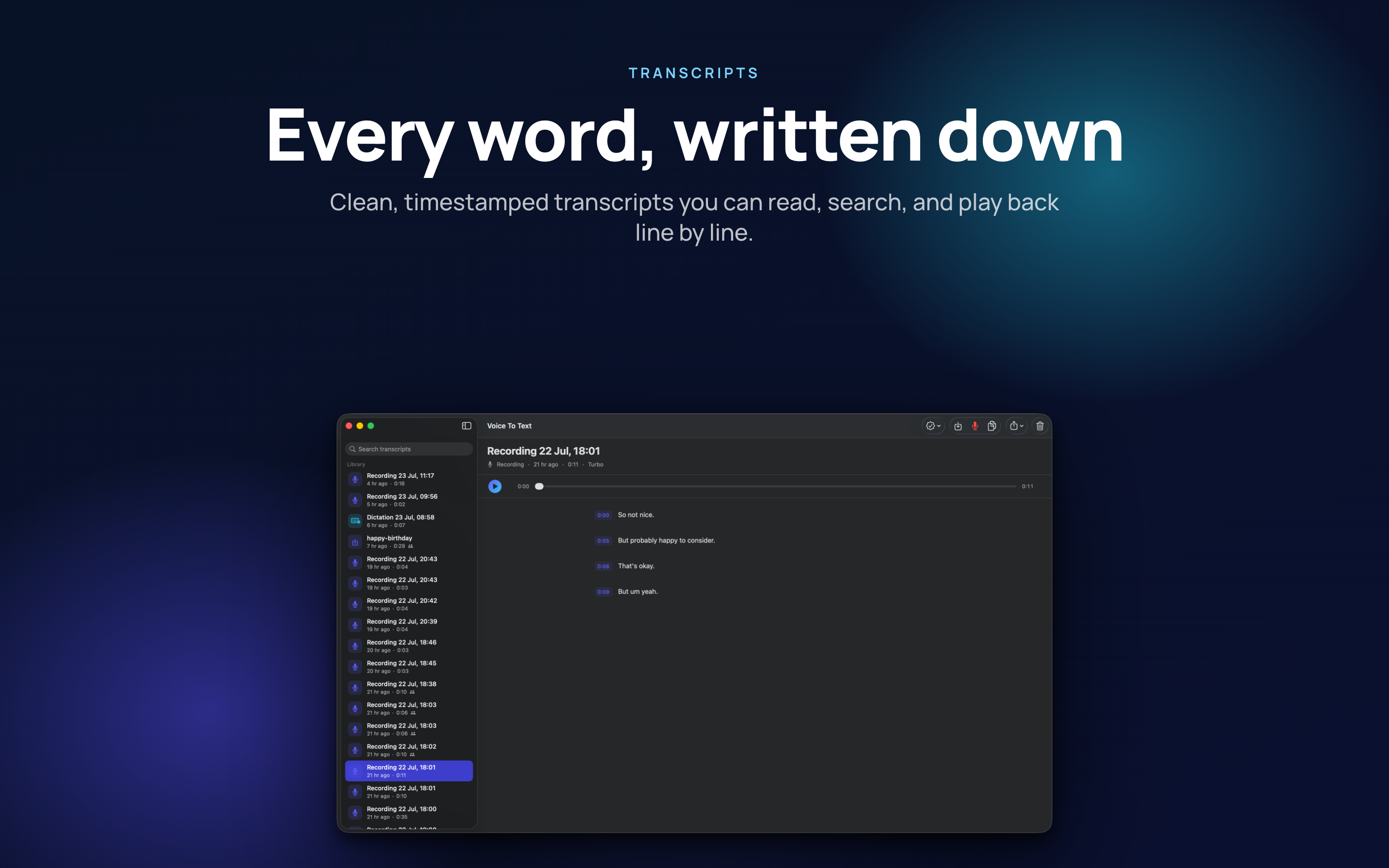
Search the transcript rather than scrubbing the audio, then jump to the timestamp to hear how it was said. Tone matters in a way a transcript does not capture, and "we can probably do that" reads as agreement on the page and often was not.
One caution
Recording rules differ by jurisdiction and by employer, and a recording you were sent is one you did not consent to being made. Before circulating a transcript more widely than the recording travelled, check that doing so is yours to decide.
Processing it locally rather than uploading it to a service is the part you can control: a meeting recording is other people's speech, and handing it to a third party is a decision made on their behalf.