Start from the likely explanation rather than the worst one. In order of frequency, an invoice is late because it was never entered into the system, because it lacked a purchase order number and got set aside, because the approver was away, because the payment run is fortnightly and it missed one - and only then because someone has decided not to pay.
Almost all of those are fixed by talking to the right person. None are fixed by waiting.
The timeline
Three days before due. A short, friendly note. "Invoice 2025-014 is due on Friday - let me know if you need anything from me." This is not chasing. It catches the "we never received it" case while there is still time, and it is the single highest-value message in the sequence.
The day after due. A factual reminder. Invoice number, amount, date it was due, attached again. No apology and no irritation - it is a statement that a payment is outstanding.
Seven days late. Stop emailing your contact and contact accounts payable directly. Ask a specific question: has the invoice been entered, and which payment run is it scheduled for? That question has an answer, and it usually reveals the actual blockage.
Fourteen days late. Phone. Email is easy to defer and a call is not. Ask for a payment date and write it down. If your contact cannot give one, ask who can.
Thirty days late. A formal notice, referencing your terms and your statutory right to interest and recovery costs. This is a change in register and it should read that way - still polite, no longer conversational.
Sixty days late. Decide. Small claims, a debt recovery service, or writing it off. Continuing to send reminders past this point rarely produces money and does consume your attention.
What to actually say
Three principles that make a difference.
Be specific. "Following up on invoice 2025-014 for £1,200, due 15 August" beats "just checking in on that invoice". The specific version can be actioned by whoever opens it; the vague one requires them to go looking.
Do not apologise. "Sorry to chase" frames asking to be paid for work you did as an imposition. It also signals that you can be deferred. State the position plainly.
Make the next step easy. Attach the invoice again every time. Include the bank details in the message. Remove every reason for it to sit in someone's inbox pending an action they have to take.
The questions that unstick things
When you get someone on the phone, these three produce more movement than anything else:
- "Has the invoice been entered into your system?" - If no, everything else is irrelevant and you have found the problem.
- "Which payment run is it scheduled for?" - Turns a vague promise into a date.
- "Is there anything missing that is holding it up?" - Frequently reveals a missing PO number that nobody thought to mention.
That last one is the most common single cause of silent delay, and it is entirely preventable - which is why the PO number belongs on the invoice from the start. We went through the fields that determine how fast an invoice clears in writing an invoice that gets paid on time.
Interest and recovery costs
In the UK and across the EU, businesses have a statutory right to interest on late commercial payments plus a fixed recovery charge, regardless of what the contract says. Similar provisions exist in many other jurisdictions.
Most freelancers never invoke it, and mentioning it is more useful than charging it. A line stating that statutory interest applies from the due date changes the tone of a conversation without you having to raise your voice.
If you do decide to charge it, do so in writing and issue it as a separate document. Adding it silently to the next invoice creates a dispute about the amount, which delays that invoice too.
Keeping track without a system
The practical problem behind all of this is knowing what is outstanding. Reconstructing it from sent mail once a month is how invoices get forgotten for six weeks.
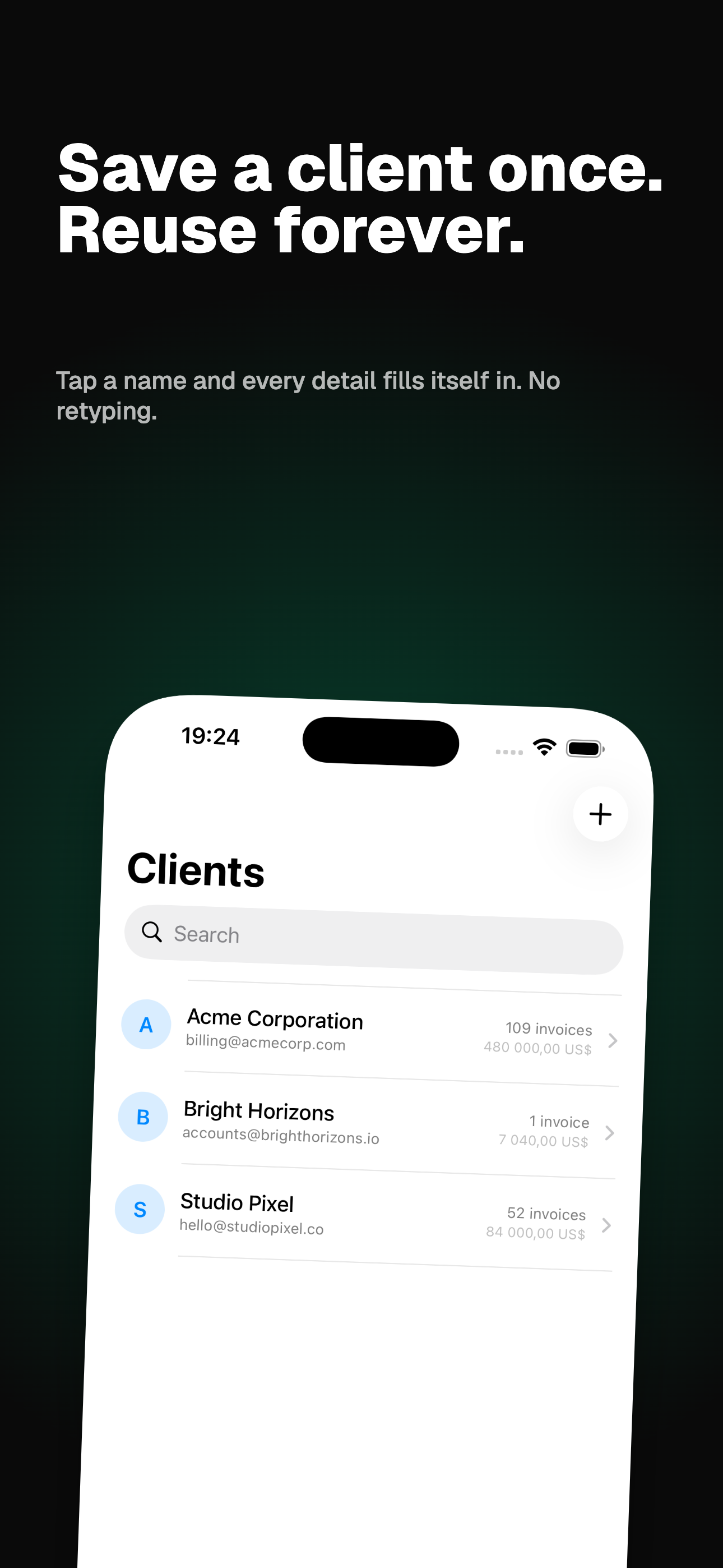
Invoice Maker keeps issued invoices, due dates and what is outstanding in one place, and produces a statement of account - which is the document accounts departments respond to fastest, because it lets them reconcile everything at once rather than one invoice at a time.
Preventing the next one
- Get the PO number before starting work, not at invoicing time.
- Ask about the payment run when agreeing terms. "We pay on the 15th" is useful to know in advance.
- Invoice immediately on completion. An invoice sent three weeks late is paid three weeks later, and it also signals that the deadline is soft.
- For large or new clients, split the work. A deposit and staged payments limit exposure and tell you early whether payment is going to be a problem.
That last point is the one that matters most over a career. A client who is slow on the first small invoice will be slow on the large one, and finding that out early is worth more than any chasing technique.