There is a real tension in property photography. The listing has to show enough for someone to recognise the place when they arrive, and not so much that anyone who saw the listing can find it without being invited.
Which side you land on depends on what is being let or sold. A house for sale is going on a map anyway. A room in a shared flat, a short-term let, or a property whose current occupant is still living there is a different situation, and the current occupant almost never gets asked.
Three identifiers, usually in one frame
Stand in front of a door and photograph it, and you will typically capture the house number, a street sign or a shop name that fixes the road, and a parked car whose registration ties to a person. Any two of those together locate the property precisely.
Covering the number alone feels like the job is done and is the least effective of the three, because a street sign plus a recognisable frontage is enough for anyone with a map.
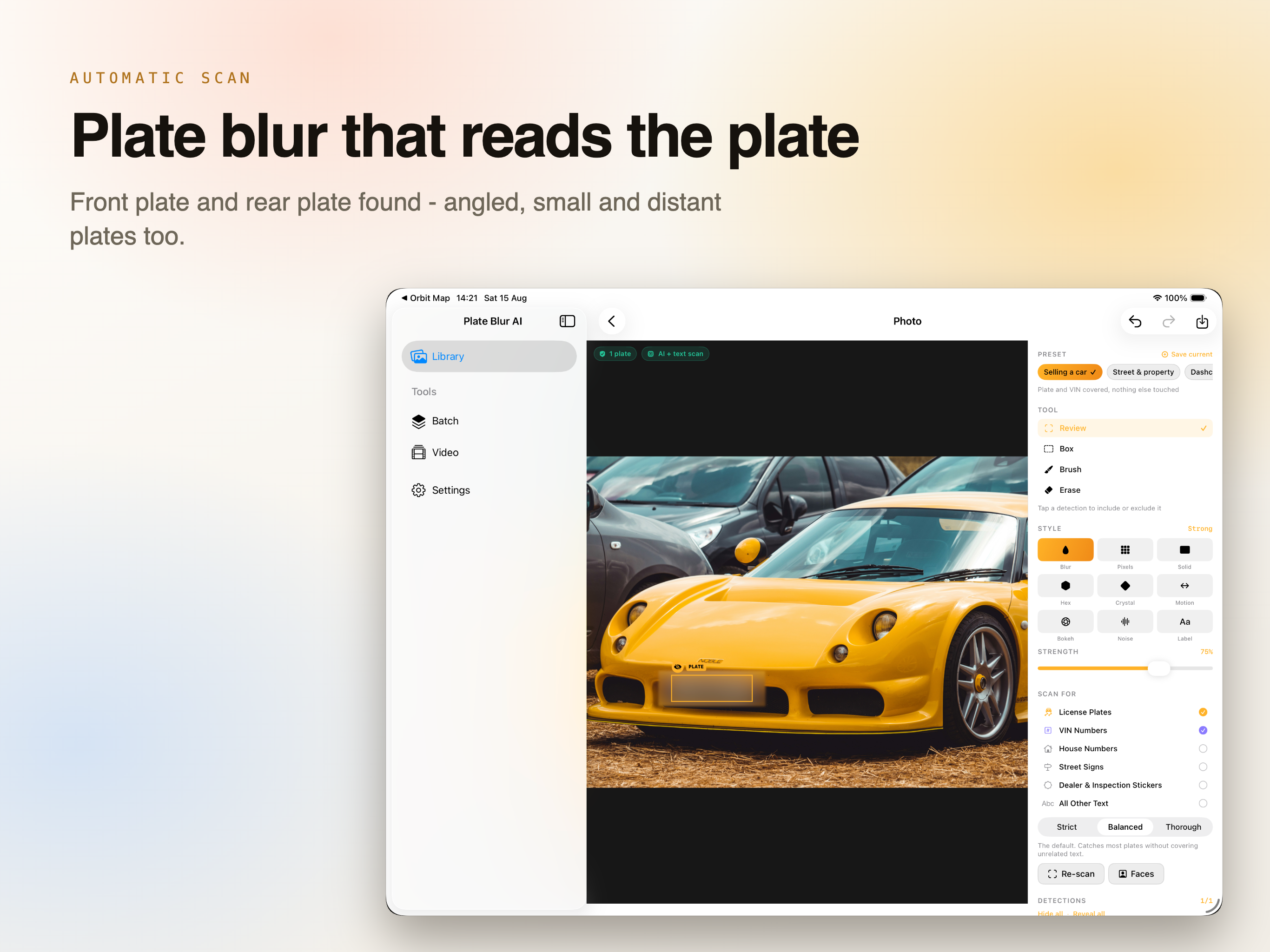
The things a detector will not catch for you
Automatic detection is good at printed text: numbers, signage, plates. It is not looking for the things that identify a property by association.
- A wheelie bin with the house number painted on it in marker.
- A delivery box on the step with a label facing the camera.
- A name plaque, which is worse than a number because it identifies a person.
- Post visible through a glass door.
- Reflections in the windows - a plate or a street opposite, mirrored.
These need a human pass. The realistic workflow is a detection run for the obvious text, then thirty seconds of looking at the frame properly, then a brush over whatever the eye caught.
The metadata problem, which is worse
A photo taken on a phone carries GPS coordinates accurate to a few metres. Covering the house number in a file that still says exactly where it was taken is not privacy work, it is decoration. Most listing platforms strip metadata on upload, but "most" is doing a lot of work in that sentence, and the file you email to a colleague is not going through a platform at all.
Strip EXIF and GPS at export, and treat that as the non-negotiable step rather than the optional one.
A note on interiors
The front is the obvious risk and the interior is the quiet one. Framed certificates on a wall, prescription boxes on a counter, a laptop screen left open, a calendar with names on it, post on a hall table. These are photographs of someone's life, taken to sell a building, and they are worth a second look before they go anywhere.