An insurer wants photographs that are complete, unedited and carry their own timestamps. A forum wants a version that does not identify four uninvolved drivers and the street you live on. Both are reasonable. They are different files.
What the claim copy needs
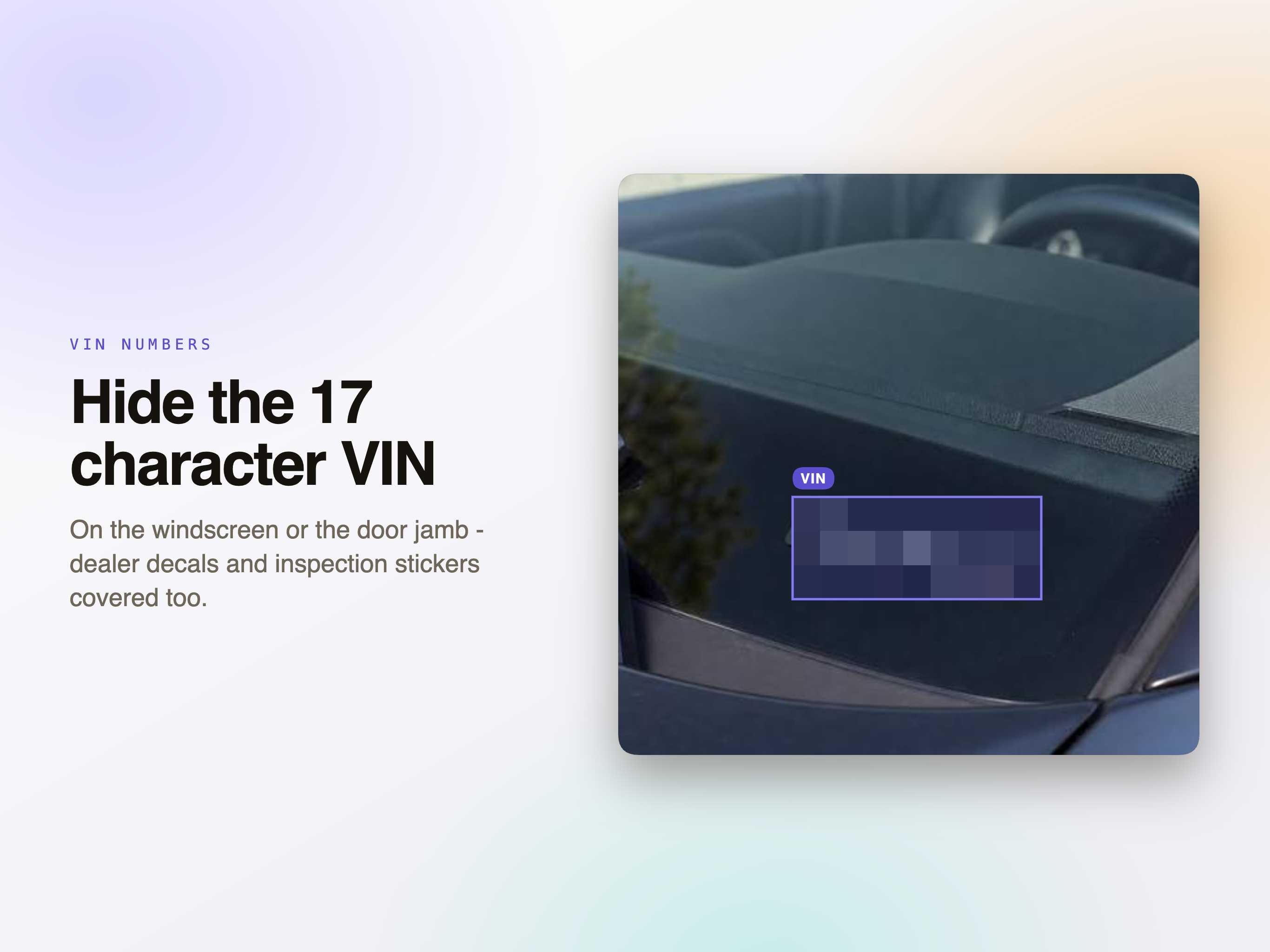
- Everything readable. Plates, VIN, road markings, signage, damage from several angles including wide shots that establish position.
- Metadata intact. The timestamp and coordinates are part of what makes the photo credible. Stripping them from evidence is the opposite of the advice for a public post.
- No edits at all. Not cropped, not rotated, not run through a filter. An edited image invites a question you do not want to be answering.
- The originals kept. Send copies, archive the originals somewhere you will still have them in eighteen months, because claims take longer than anyone expects.
What the public copy needs
The reverse of most of that. Cover the registrations of everyone who is not a party to the incident, and think hard about whether the other party's plate needs to be visible - the insurer already has it, and publishing it invites a pile-on directed at a named person.
Then strip the metadata, because a public post carrying coordinates and a timestamp tells people where you were and when, and by implication where you were not.
The filing that makes this work
Two folders, named so they cannot be confused: one for what was shot, one for what gets shared. Redaction always runs from the first into the second and never in place. The failure mode is redacting the only copy and then being asked for the original.
The documents are the other half
Claims involve paperwork as well as photographs, and photographed paperwork is where identifiers cluster: policy numbers, addresses, signatures, sometimes bank details on a repair invoice.
Scan those rather than photographing them at an angle - a straight, cropped page is easier for an adjuster to read and less likely to catch the rest of your desk in frame. Assemble them into a single PDF rather than sending fourteen attachments, and keep the redacted set entirely separate from the submitted set.
One thing worth checking
If you posted a redacted version publicly before the claim settled, keep a note of what you posted and when. It occasionally becomes relevant, and reconstructing it later from memory is unpleasant.