Etymology, the study of word origins, is full of stories that are too good to be true, so the ones below stick to origins dictionaries agree on - and flag the ones that are commonly repeated but disputed.
Words hiding a picture
Window. From Old Norse vindauga, literally "wind eye". Early windows were openings in a wall or roof that let smoke out and air in, before glass was common.
Muscle. From Latin musculus, "little mouse". The usual explanation is that a flexing muscle under the skin looked like a small mouse moving.
Nightmare. The "mare" has nothing to do with horses. It comes from an Old English word for a spirit believed to sit on sleepers' chests and cause bad dreams.
Words hiding a number or a place
Quarantine. From Venetian Italian quaranta giorni, "forty days": the period ships arriving in Venice during plague outbreaks had to wait before passengers could come ashore.
Trivia. From Latin trivium, a place where three roads meet. How it came to mean small, unimportant facts is debated; one suggestion is the sort of commonplace talk heard at a crossroads.
Words hiding people
Companion. From Latin com, "with", and panis, "bread": someone you share bread with. The same root gives us "company".
Sandwich. Named after John Montagu, the 4th Earl of Sandwich, in the 18th century. The popular story says he asked for meat between bread so he would not have to leave a card game; others say he was simply working at his desk.
Robot. From Czech robota, meaning forced labour. It entered English through Karel Čapek's 1920 play R.U.R., and Čapek credited his brother Josef with suggesting the word.
Words hiding a belief
Disaster. From Italian disastro, literally "ill-starred" - from a time when misfortune was blamed on an unfavourable position of the stars.
Goodbye. A contraction of "God be with ye", worn down over centuries of use and later reshaped by analogy with "good day" and "good night".
Clue. Originally "clew", a ball of thread. In the Greek myth, Theseus used a thread to find his way out of the Minotaur's labyrinth, so a clew became something that guides you to a solution.
A popular story to treat carefully
Salary comes from Latin salarium, which is connected to sal, salt. You will often read that Roman soldiers were paid in salt. Historians point out there is little direct evidence for that; the link to salt is real, but the exact story behind it is uncertain.
Why origins help memory
A word learned as a bare sound and a definition has one connection in memory. A word learned with a story - wind eye, little mouse, forty days - has several. Each extra connection is another route back to it when you need it.
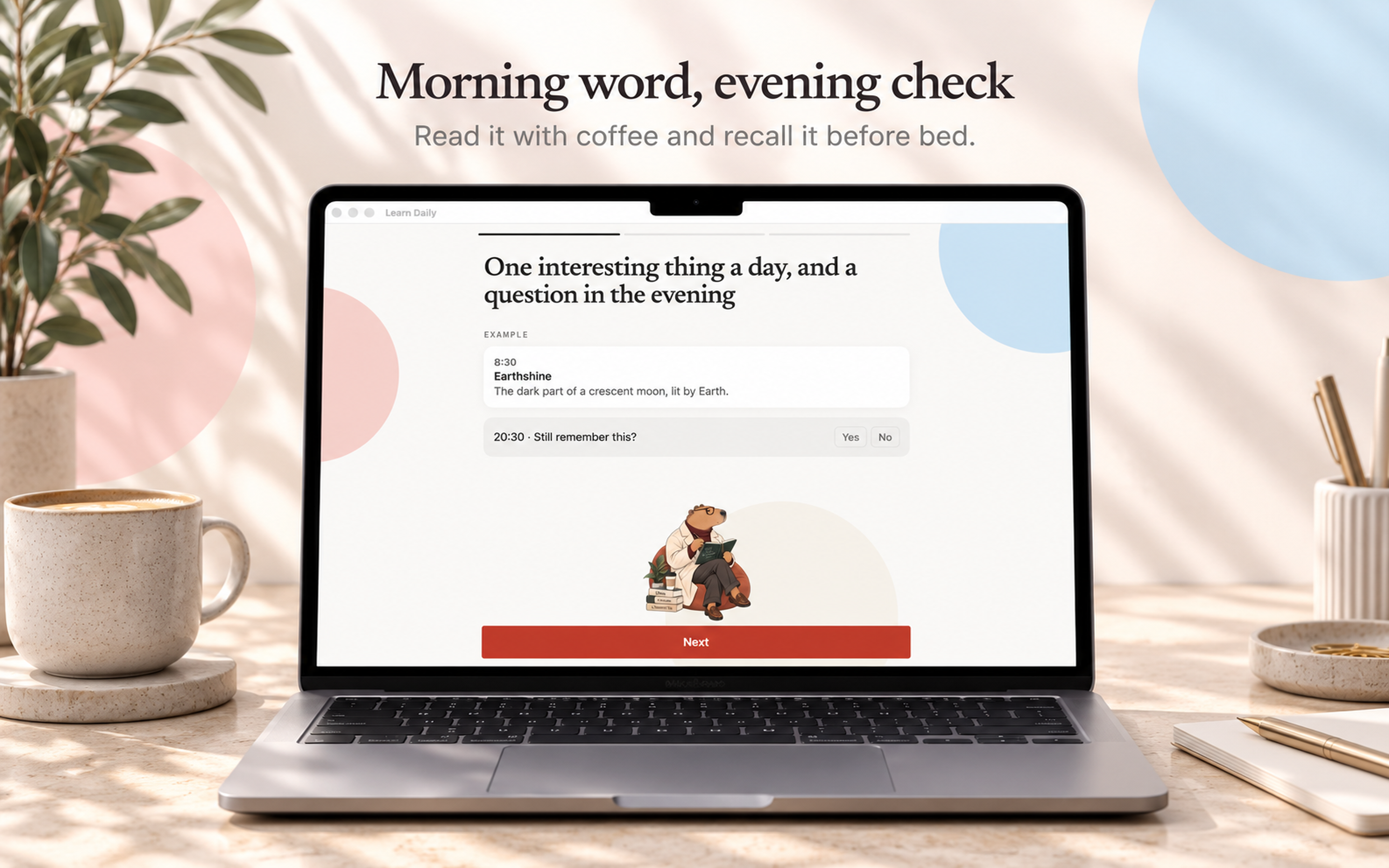
That makes etymology unusually good material for a daily habit: short, surprising, and easy to recall again a few days later.