The museum experiment
In a study published in 2014, the psychologist Linda Henkel took students on a guided tour of a university art museum. At some objects they were told to take a photograph; at others, simply to look. The next day they were tested.
They remembered fewer of the objects they had photographed than the ones they had only looked at, and fewer details about them. Henkel called it the photo-taking impairment effect.
One explanation is that we "offload" memory to the camera: once the picture is taken, part of the mind treats the job as done and stops paying attention. The phone remembers, so we do not have to.
The twist: zooming in helped
In a second experiment, some students were asked to zoom in on a particular part of an object before taking the photo. For those objects the impairment disappeared - and they remembered not only the part they had zoomed in on, but the parts that were outside the frame too.
The difference was attention. Framing a detail made them look properly. The camera itself was not the problem; taking a picture instead of looking was.
What this means for a trip
- Look first, then shoot. Give a view ten seconds of your full attention before the phone comes out.
- Photograph a detail. The tile, the menu, the face - not only the wide shot everyone takes.
- Take fewer. Twelve attempts at the same sunset are twelve moments of fiddling instead of watching.
The photos still matter - later
None of this means photos are bad for memory. Their value just comes later, when you look back at them. Trying to remember is one of the most reliable ways to strengthen a memory - the same reason testing yourself beats rereading - and a photo is an excellent cue.
The catch is that most trip photos are never looked at again. The memories that last are the ones you return to: the trip you tell as a story, the photo on the fridge, the album you leaf through a year later. See what to do with thousands of travel photos.
Turning looking back into a habit
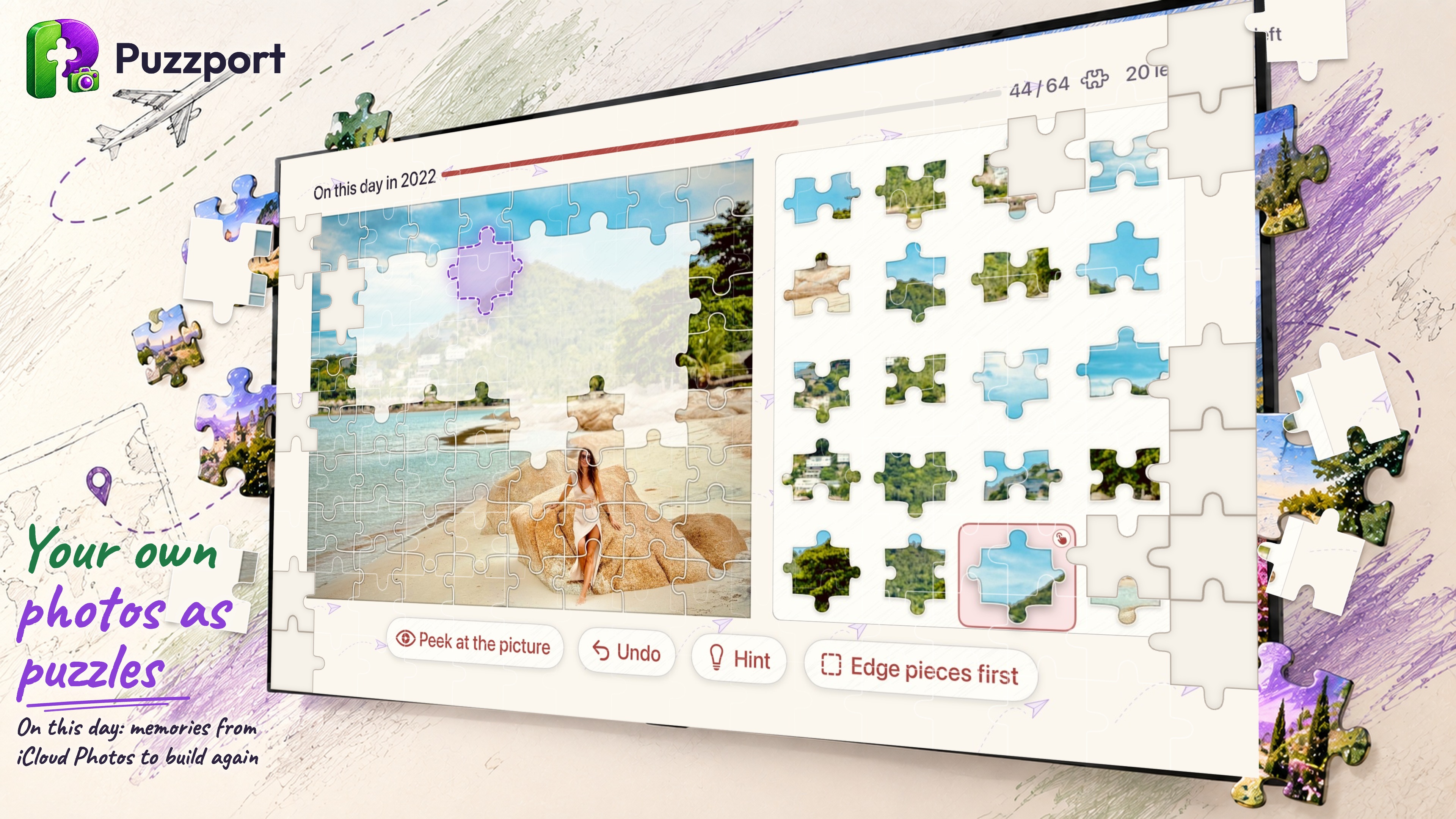
Puzzport is built around that second half. It turns your trip photos into jigsaws - fifteen quiet minutes of looking closely at a picture - and then asks you to remember: where was this, what came next. A while after a trip, a few new puzzles bring it back, and on this day years ago, an old photo returns as a puzzle.