Light pollution is usually described in terms of the Bortle scale, which runs from 1 - a genuinely dark site where the Milky Way casts shadows - to 9, an inner-city sky where a handful of stars are visible. Most people in Europe and North America live at 7 or 8.
What that number actually costs you is specific rather than general, and the list is shorter than the despair suggests.
What survives a city sky
The Moon. Entirely unaffected. Bright enough that light pollution is irrelevant, and the single most rewarding object for anyone with binoculars. The terminator - the line between lit and unlit - is where the craters have shadows and depth, which is why a half moon is far more interesting than a full one.
The planets. Jupiter, Saturn, Venus and Mars are all bright enough to punch through anything. Jupiter's four large moons are visible in ordinary binoculars, and their positions change visibly over a single evening. Saturn's rings need a small telescope and are the moment that converts people.
The bright stars and the major constellations. Orion, the Plough, Cassiopeia, the Summer Triangle. Roughly the top two hundred stars remain visible in most cities, which is enough to learn the sky properly.
The ISS. Brighter than almost everything and completely unaffected by city glow. Passes are predictable to the minute.
Bright meteor showers. Reduced but not eliminated. The Perseids and Geminids still produce visible meteors from a suburb.
What a city takes away
The Milky Way. Gone below about Bortle 5, and this is the loss people mean when they talk about light pollution. It is not dim in a city - it is absent.
Nearly all deep-sky objects. Galaxies and nebulae are large and faint, and faint is exactly what a bright sky removes. The Orion Nebula and the Andromeda Galaxy survive in suburbs as smudges; from a city centre, neither is there.
Faint meteors. Most meteors in a shower are dim. A city sky removes the majority and leaves the few bright ones, which is why counts from a city are so much lower than the advertised rate.
Dark adaptation. The underrated loss. Full dark adaptation takes 20 to 30 minutes and is destroyed by one glance at a phone screen. In a city you never reach it at all, because there is always a street light.
Getting more out of the sky you have
- Block direct light. Not the glow - the street lamp actually in your field of view. Standing in the shadow of a building makes a bigger difference than driving twenty minutes.
- Give it twenty minutes, with no phone. Even partial dark adaptation roughly doubles what you can see.
- Use red light if you need light at all. It preserves adaptation in a way white light does not.
- Look slightly to the side of faint objects. Averted vision uses the more sensitive part of the retina, and it genuinely works - a smudge that vanishes when you look at it directly reappears when you look just past it.
- Go up. A roof or an upper window puts you above some of the horizontal glare.
- Use binoculars before a telescope. 10×50 binoculars show the Moon, Jupiter's moons, star clusters and the Andromeda smudge, cost a fraction of a telescope, and get used far more often.
How far you actually have to go
The honest answer is further than most people hope. Light pollution falls off slowly, and a city of a million throws a dome visible from fifty kilometres away.
Rough expectations: half an hour out of a city gets you from Bortle 8 to about 6, which brings back the brighter deep-sky objects. An hour and a half gets you to 4 or 5, where the Milky Way appears. Bortle 1 and 2 sites in Western Europe are rare enough to be destinations in themselves.
The practical implication is that a spontaneous drive rarely pays off, and a planned trip to a designated dark-sky park usually does.
The screen version
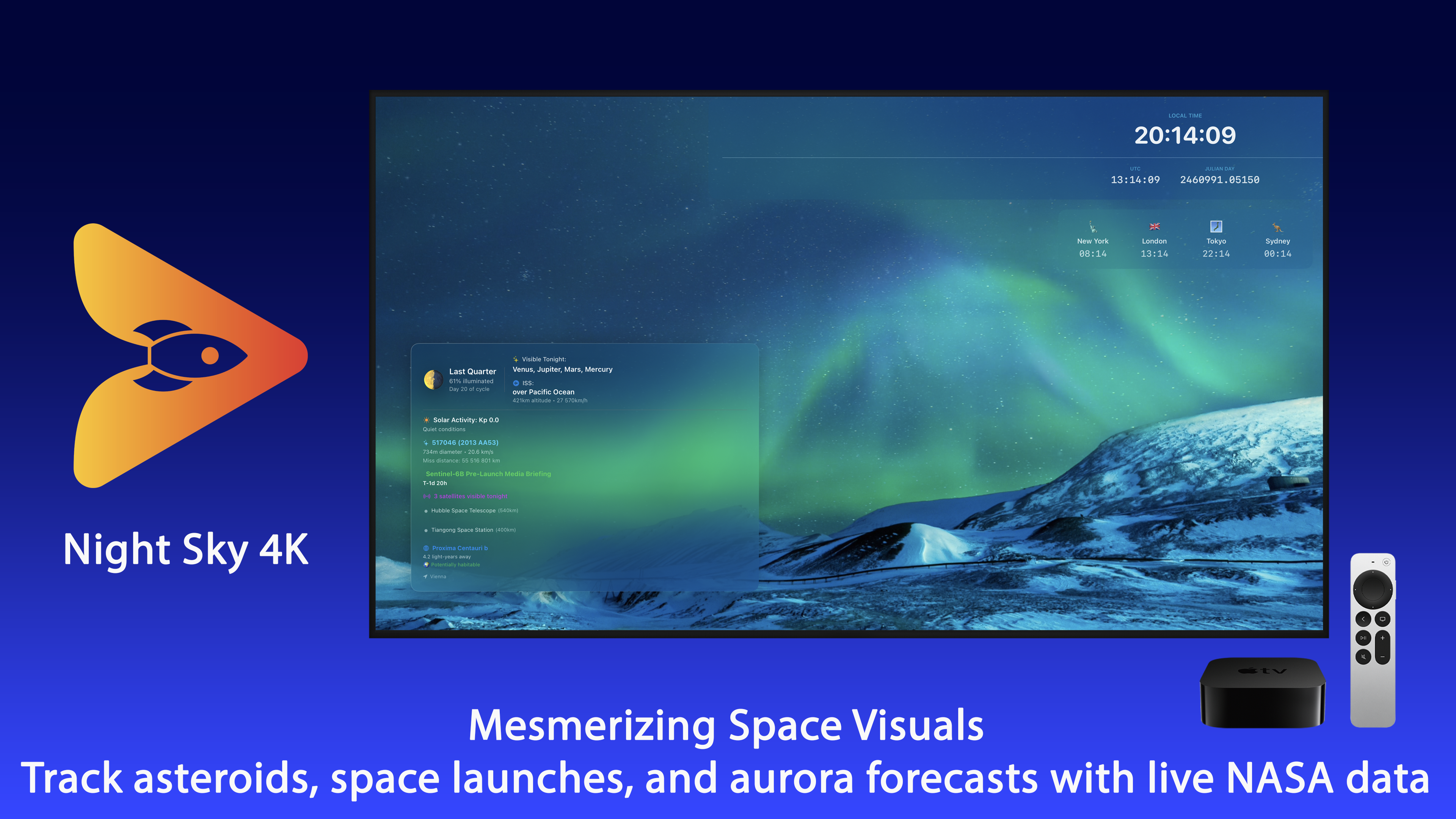
For the nights when you are not driving anywhere - which is most of them - a deep-sky view on a television is a genuinely different thing from a photograph. At 4K on a large panel, in a dark room, the scale reads in a way a print does not.
Night Sky 4K is what we made for that: starfields and nebulae as ambience rather than a documentary, which also makes it one of the better things to leave running in an evening room - dark, slow, and never asking to be watched.
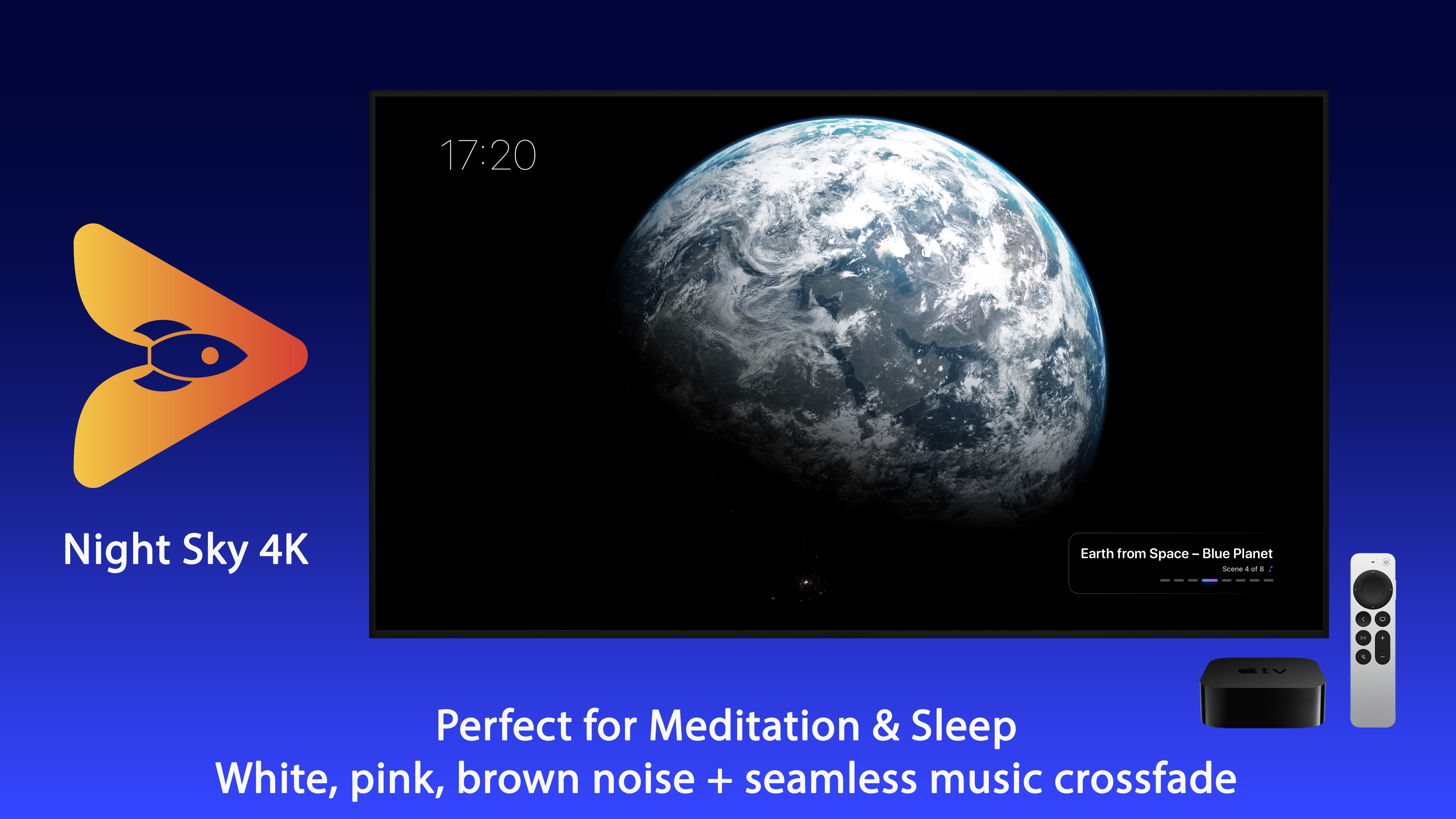
It is not a substitute for a dark sky and does not pretend to be. It is the version available on a Tuesday in November when the alternative is a grey ceiling of cloud.