Linguists distinguish between receptive vocabulary - the words and phrases you understand - and productive vocabulary - the ones you actually use. For almost everyone, the receptive set is much larger. For idioms, the difference is especially wide.
Why idioms stay passive
Understanding an idiom in context is easy. The surrounding sentence does half the work. Producing one requires something harder: noticing, in the middle of your own sentence, that an idiom fits, retrieving its exact wording, and being confident enough to say it.
Three things tend to stop people:
- Uncertainty about the exact form. Is it "cut corners" or "cut the corners"? Getting it slightly wrong sounds worse than using a plain phrase.
- Uncertainty about tone. Is this expression casual, formal, old-fashioned, or slightly rude?
- No retrieval practice. You have read "back of the envelope" many times, but you have never had to produce it from memory.
Choose idioms you would genuinely use
Not every idiom is worth learning to produce. Many are dated or regional. Start with expressions that are common in everyday and working English:
- Back of the envelope - a quick, rough calculation.
- Cut corners - do something cheaply or carelessly to save time or money.
- The elephant in the room - an obvious problem that everyone avoids mentioning.
- On the fence - undecided between two options.
- A blessing in disguise - something that seemed bad but turned out well.
- Bite the bullet - make yourself do something difficult or unpleasant.
These work in meetings, emails and conversation, which means you will actually get chances to use them.
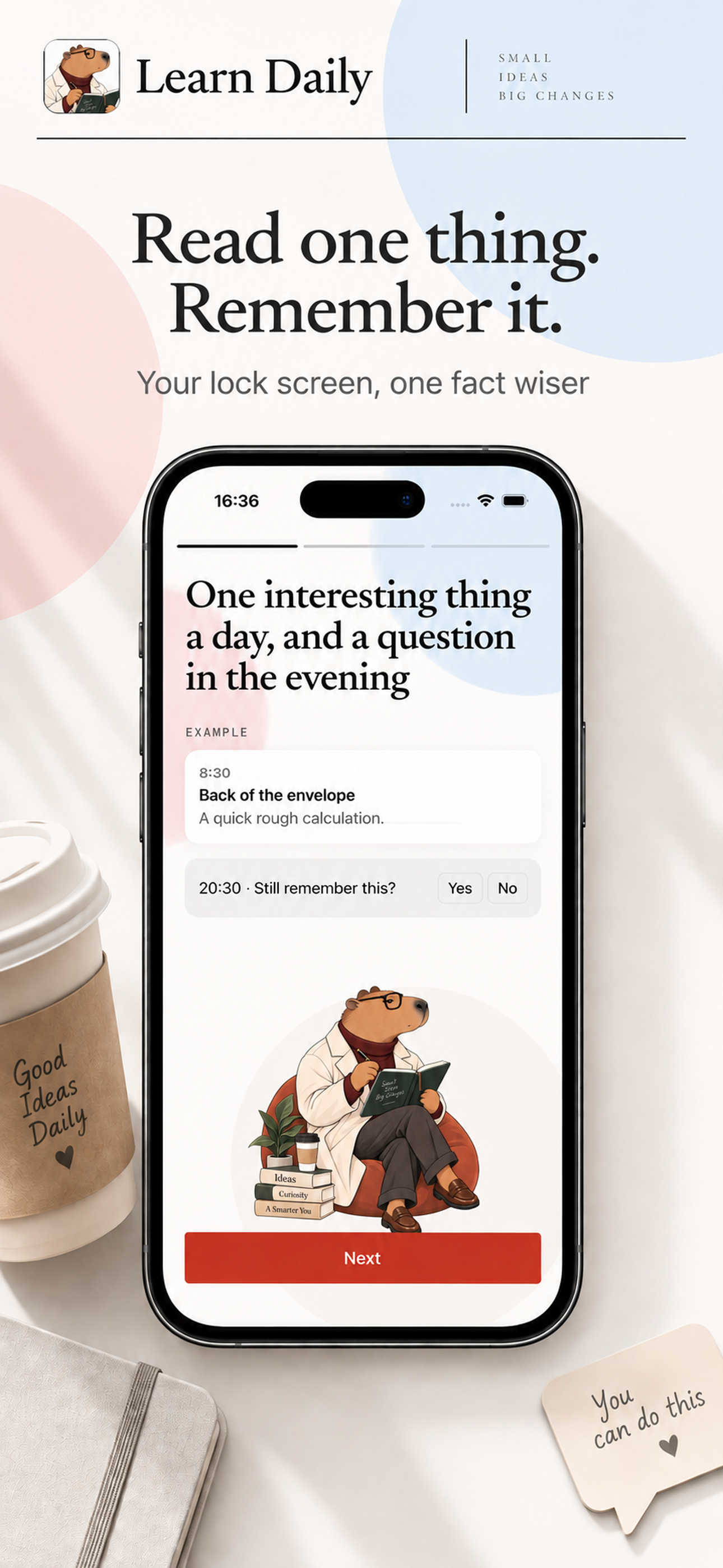
Moving an idiom from passive to active
1. Learn the whole chunk. Treat the idiom as one unit, including its small words. "On the fence", not "on a fence".
2. Put it in your own sentence. A sentence about your own life - "We did a back-of-the-envelope estimate before the meeting" - gives the expression a hook it did not have.
3. Recall it, do not reread it. See the meaning and try to produce the idiom, or see the idiom and explain it without looking. Retrieval is what builds productive access.
4. Space the reviews. Meet it again a few days later, then a week, then two. One expression a day, reviewed this way, adds up to a real repertoire within months.
5. Use it once on purpose. The first time is the hardest. Plan a sentence for a meeting or a message and say it. After that, it starts appearing on its own.
A note on overdoing it
Learners sometimes swing from never using idioms to using too many. Several in one paragraph sound rehearsed, and an idiom forced into the wrong situation sounds odd even when the words are correct. One well-placed expression in a conversation is plenty.
Why this matters
Idioms are not decoration. They are how fluent speakers compress an idea into a phrase everyone recognises. Someone who can say "that was a back-of-the-envelope figure" communicates, in five words, that the number was rough and should not be relied on. Being able to do that is part of sounding like yourself in a second language.