An invoice has one job: to be paid without anyone having to ask you a question. Every question - what is this for, which project, who approved it, where do we send the money - is a week.
Larger clients make this concrete. Their accounts payable process runs on a schedule, and an invoice that cannot be matched to a purchase order does not get queried immediately; it gets set aside, and you find out three weeks later when you chase it.
The fields that must be there
These are not optional, and in most jurisdictions several are legally required for the document to count as an invoice at all.
- The word "Invoice". Sounds absurd. Documents titled "Summary of work" get filed as correspondence.
- A unique invoice number. Sequential, never reused. This is how anyone refers to the document later.
- Issue date, and separately, due date. Not "Net 30" alone - an actual date. Removing the arithmetic removes the ambiguity about when the clock started.
- Your full legal name or company name and address. A trading name alone is not enough if the registered entity differs.
- Your tax registration number, if you have one. VAT number, ABN, whatever applies.
- The client's legal entity and billing address. Not the name of your contact. The entity that will pay.
- Line items with quantity, unit price and total. One line per distinct thing.
- Subtotal, tax as its own line, and the total. Never a single number with tax folded in silently.
- Payment details. Account number and sort code, IBAN and BIC, or whatever the corridor needs.
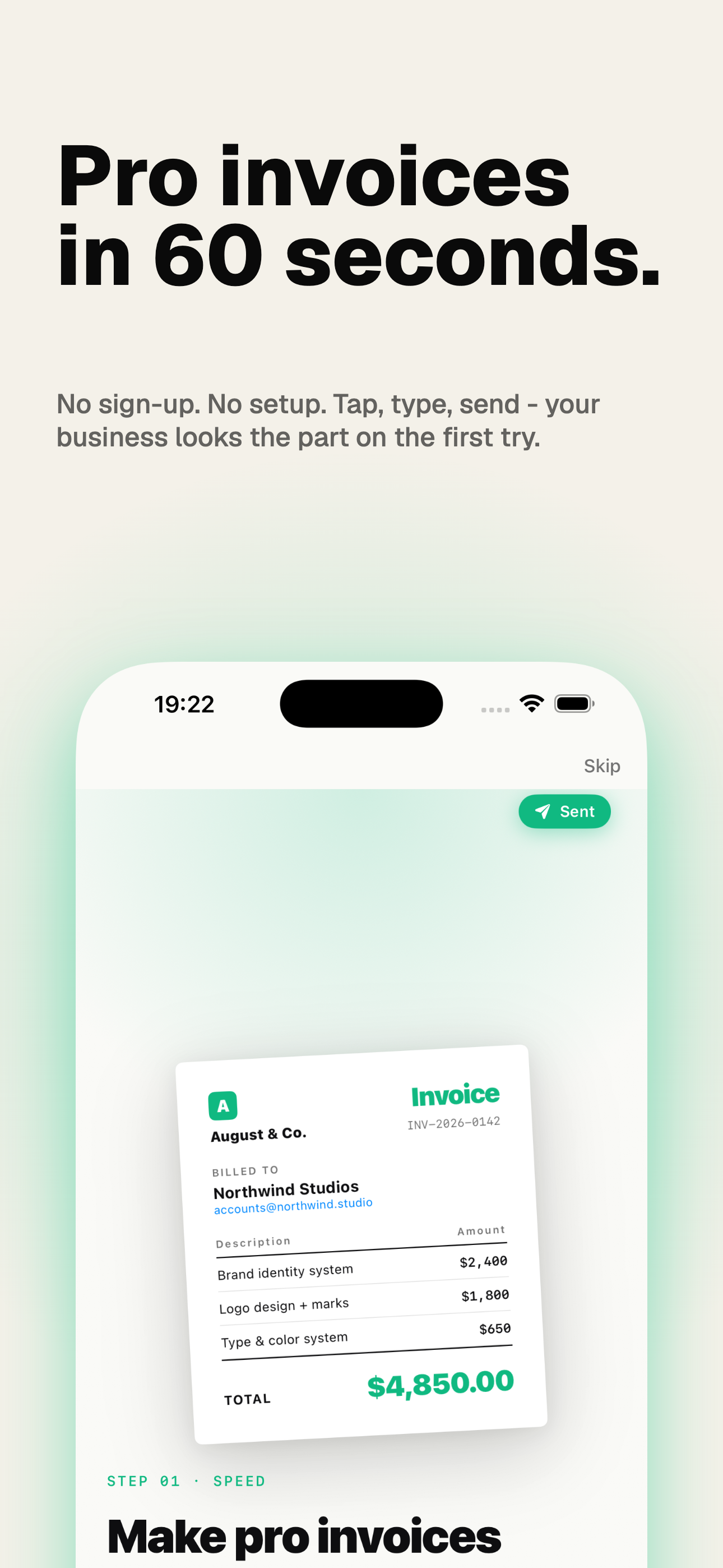
The fields that decide the speed
Everything above makes it a valid invoice. These make it a fast one.
The purchase order number. Where a client uses POs, this is the single most important field on the document, ahead of the amount. No PO number means manual matching, which means a person, which means a queue. Ask for it before you start work.
The name of who approved it. The person who signed off, not the person who introduced you. Accounts routes approvals by name.
A project or reference code, if the client uses them. Free text is fine; matching their format is better.
The billing period. "Services rendered" tells a reviewer nothing. "Design work, 1–31 May 2025" can be checked against a contract in five seconds.
Numbering, and why it matters more than it seems
Invoice numbers must be unique and should be sequential. Two schemes work:
2025-001, 2025-002, 2025-003          # year plus counter
ACME-2025-04, ACME-2025-05            # client prefix plus counter
The client-prefixed version is easier to talk about on the phone. The plain sequential version makes gaps obvious, which matters if you are ever audited - an unexplained jump from 014 to 016 is a question you want to be able to answer.
What does not work: dates alone, because you will issue two on the same day. Or random numbers, because you will reuse one eventually.
Terms people actually honour
"Payment due on receipt" is aspirational and nearly always ignored - most organisations cannot pay faster than their payment run regardless of what your document says.
Net 14 is realistic for small clients. Net 30 is the default for anything corporate. Net 60 exists and should be priced in rather than accepted quietly.
Late payment interest is worth stating whether or not you intend to charge it. In many jurisdictions you have a statutory right to it, and a line on the invoice makes a follow-up conversation much shorter.
Format: PDF, and one file
Send a PDF. Not a word processor document that reflows on their machine, not a spreadsheet, not an image of an invoice.
Name the file so it survives being saved to a shared drive:
2025-014 Acme Ltd - Invoice - May 2025.pdfNot invoice.pdf, which will be the fourth file with that name in their downloads folder.
If you need to attach timesheets or receipts, merge them into one document rather than sending four attachments - the second attachment is the one that gets lost. We covered merging PDFs on a Mac separately, including what it does to file size.
Things that get invoices returned
Observed repeatedly, all avoidable:
- Addressed to a person rather than the company.
- Rounding errors, where line items do not add to the stated total. Automatic disqualification in most systems.
- Tax charged at the wrong rate, or charged when not registered.
- Bank details that changed since last time without a phone call - which now looks exactly like an invoice fraud attempt, and will be treated as one.
- A currency symbol without the code. "$" is ambiguous across at least five currencies; "USD 1,200" is not.
That last one costs more than people expect on international work, where the recipient's system converts and someone has to establish what you meant.
Doing it without a spreadsheet
Most people start with a spreadsheet template, which works until the third client and the first credit note. The failure modes are consistent: numbering drifts, last month's client name survives in a cell, totals stop matching after a row is inserted.
Invoice Maker keeps clients, numbering and tax rates in one place and produces the PDF, which mainly removes the opportunity to make the arithmetic mistakes above.
Before you send
- Does the total equal the sum of the lines, including tax?
- Is the client's legal entity correct, not just their trading name?
- Is the PO number on it, if they use them?
- Is the due date an actual date?
- Are the bank details the current ones?
- Is it a PDF with a filename someone could find again?
Thirty seconds. It is the difference between being paid on their next run and being paid on the one after.