A tone generator does one thing: it produces a pure tone at a frequency you set. No music, no noise, no processing. That sounds almost too simple to be worth an app until you notice how many small problems it solves.
Anti Pest puts that control on your iPhone with the frequency shown at all times, so you always know exactly what is playing. Here is what people actually use it for.
The famous mosquito tone
The tone that made this whole category well known sits around 17 kHz. Its distinguishing feature is that hearing at those frequencies fades with age - most teenagers hear it clearly, and most people past forty do not hear it at all.
That single fact has made it a small cultural phenomenon: ringtones that only the person's own generation can hear, a party trick that works reliably on a mixed-age room, and a genuinely interesting demonstration of something about your own hearing you would never otherwise notice.
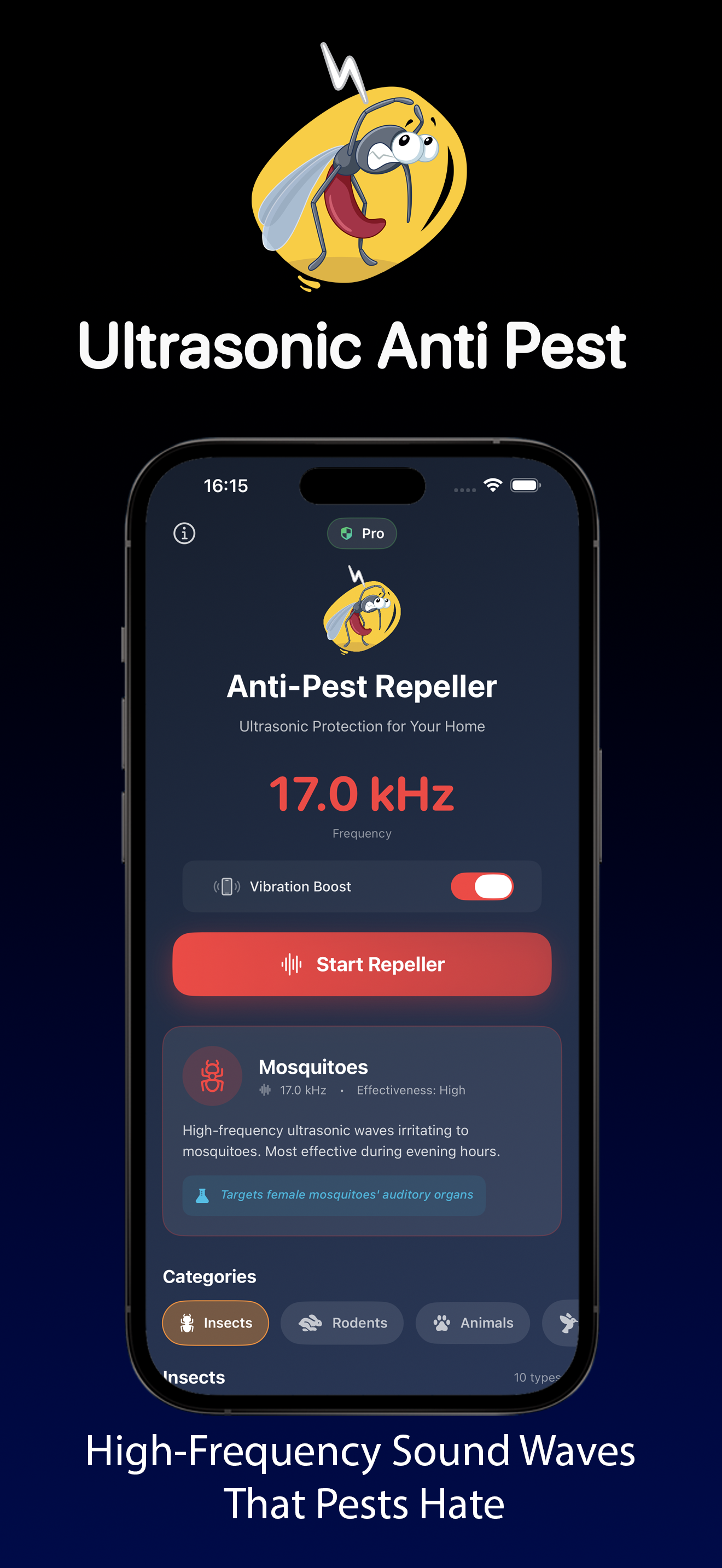
Play it in a room and watch who reacts. It is the fastest way to make an abstract fact about hearing into something people can feel.
Finding your own hearing range
The more useful version of the same thing. Start around 8 kHz, where everyone hears comfortably, and sweep upward until the tone disappears for you.
Rough expectations by age:
- Under 20: often to 17–19 kHz.
- 20s and 30s: typically 15–17 kHz.
- 40s: often around 14 kHz.
- 50 and over: commonly 12 kHz or below.
This is not a medical test and does not replace one - phone speakers and headphones vary, and so does the room. What it is very good at is showing you roughly where your own ceiling sits, and letting you compare with other people. Doing it once a year is oddly compelling.
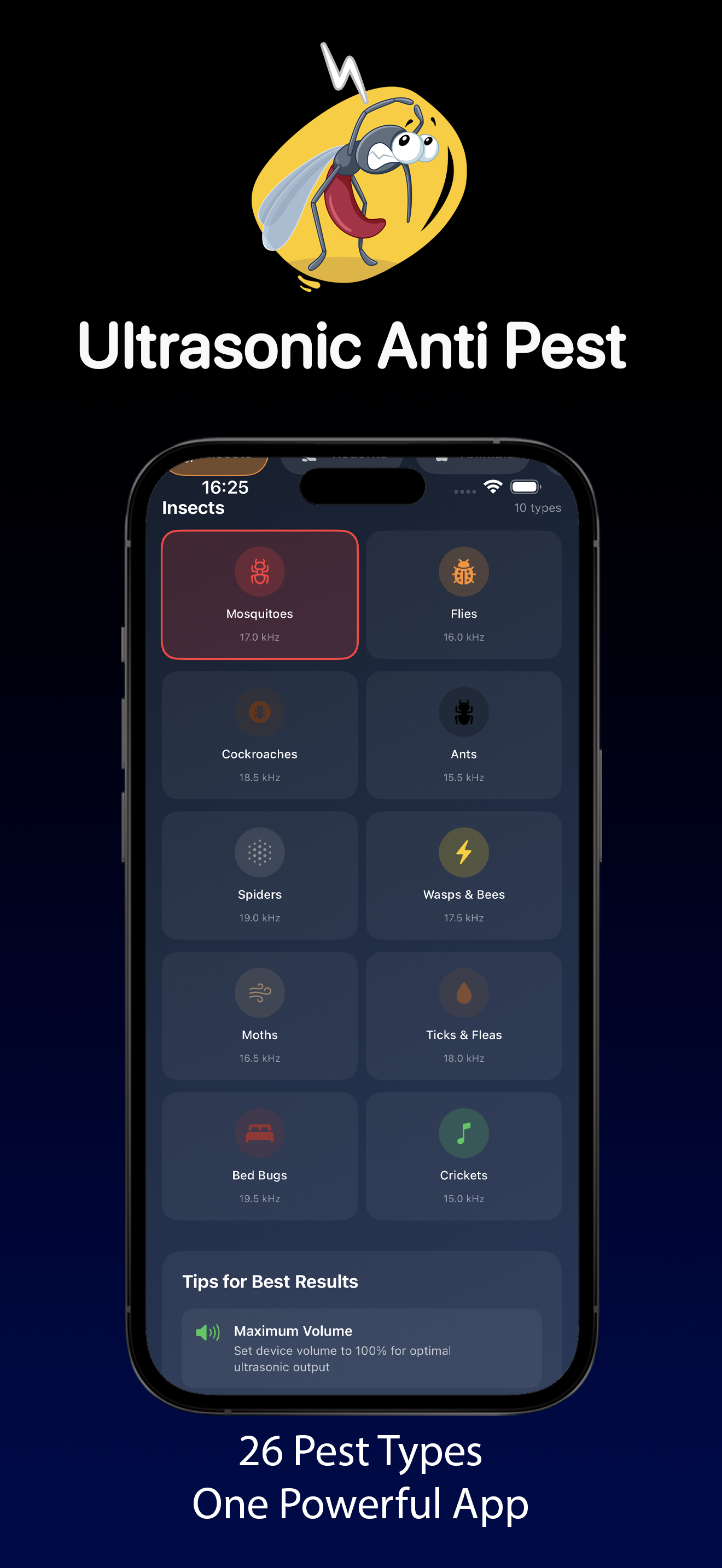
Testing speakers and headphones
A frequency sweep tells you things music does not.
Play a tone and move slowly through the range, listening for rattles, buzzes and ranges where the sound suddenly drops away. A speaker with a loose driver will buzz at a specific frequency and sound perfectly fine on anything else. A headphone with a failing side goes quiet in a band rather than all at once.
Useful when you are buying secondhand, when something sounds subtly wrong and you cannot say why, or when you want to know whether a cheap speaker actually reproduces the low end it claims to.
Masking sound you cannot control
A steady tone or low-frequency hum covers intermittent noise far better than silence does. A neighbour's television, traffic, a conversation through a thin wall - the problem is not the volume but the fact that it keeps changing, and a constant sound underneath smooths that out.
Low frequencies work best here. Somewhere between 40 and 200 Hz is unobtrusive and surprisingly effective, and it is a good deal cheaper than a white-noise machine you have to find room for.
What animals hear
Dogs hear far higher than we do - to roughly 45 kHz - and cats higher still. The overlap you can demonstrate with a phone is the band between your own ceiling and theirs, which is a real and often entertaining gap. A tone at 16 kHz that you cannot hear at all will get an unmistakable ear twitch from a dog across the room.
Getting the most out of it
A few practical notes.
- Volume matters more than you expect at high frequencies. Phone speakers put out less energy up there, so a 17 kHz tone needs more volume than a 1 kHz one to be equally audible.
- Headphones give a cleaner result than the built-in speaker for hearing-range tests, because the speaker's own limits stop being part of the measurement.
- Change frequency in small steps near your ceiling. The drop-off is sharper than people expect, and a 1 kHz jump can take you from clearly audible to nothing.
- Be considerate with the high tones. Just because you cannot hear 17 kHz does not mean the person next to you, or their dog, is having the same experience.
Why a dedicated app
You can find tone files online, and they work until you want a frequency between the ones somebody uploaded. The point of a generator is that the frequency is a control rather than a file: you sweep, you stop where it gets interesting, you go back a hundred hertz to check.
Anti Pest keeps the number visible the whole time, so every one of the uses above is a matter of setting a value and pressing play rather than searching for the right clip.