Streaks work, at first. Nobody wants to break a 40-day run, so on a tired evening you open the app, do the minimum, and keep the number alive. The question is what exactly the streak is training you to do.
What a streak really rewards
A streak does not measure how much you have learned. It measures consecutive days with at least some activity. Those two things drift apart quickly.
On a busy day, the rational move is the smallest possible action that keeps the count going. Over time the habit becomes "protect the number" rather than "learn something", and the quality of practice quietly falls while the streak grows.
The day it breaks
People are more upset by losing something than pleased by gaining the same amount - a well-established pattern psychologists call loss aversion. A long streak is a large thing to lose.
When it does break - illness, travel, a hectic week - the loss feels out of proportion to one missed day. Researchers studying dieting described a related pattern: once a rule is broken, people often abandon it completely rather than simply resuming. It has been nicknamed the "what-the-hell effect". A broken streak invites exactly that response: the run is gone, so why bother.
The irony is that the missed day itself did almost no damage to what you had learned. The damage comes from quitting afterwards.
What the habit research says about missed days
A frequently cited study by Benjamin Lally and colleagues at University College London, published in 2010, followed people forming new daily habits. Reaching automaticity took a median of around 66 days, with enormous variation between people. One of its most useful findings was that missing a single opportunity did not materially affect the habit's formation.
In other words, the thing a streak treats as catastrophic is, by the evidence, close to irrelevant.
What keeps a routine going instead
Make it tiny. The smaller the daily action, the fewer days you will have a reason to skip it. Twenty seconds is easier to protect than twenty minutes.
Attach it to something you already do. A card that arrives with your first coffee is easier to keep than one that relies on remembering.
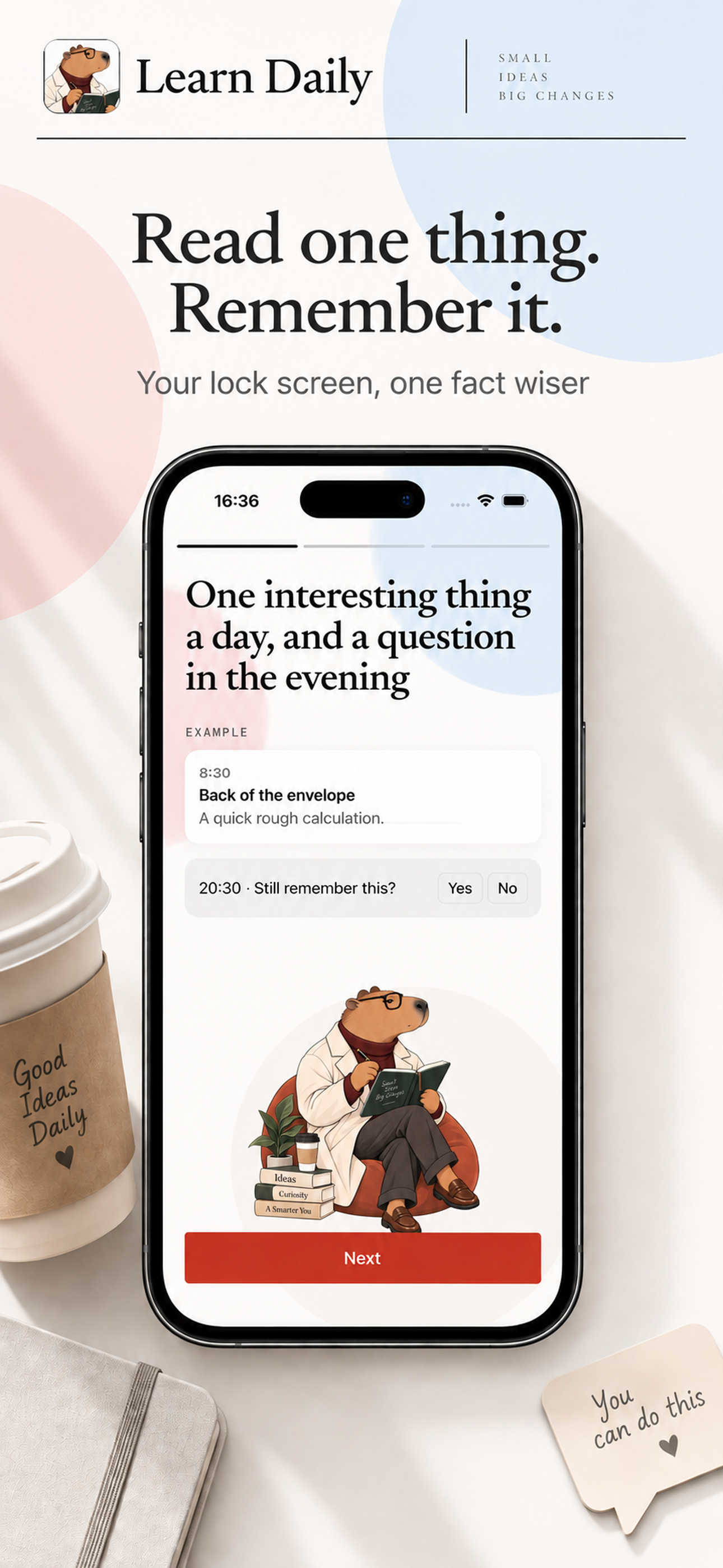
Let it come to you. A notification and a widget remove the step of deciding to open the app at all.
Measure what lasts, not what is consecutive. "How many of the things I learned are still with me" is a far better progress signal than "how many days in a row did I tap".
Make restarting free. If missing a day costs nothing, the next day is just a normal day, and there is no dramatic moment at which to give up.
Is there anything good about streaks?
Yes. For some people, a visible run is genuinely motivating, and a milestone is worth celebrating. The problem is not marking progress. It is making progress fragile.
A celebration on day thirty, a hundred or a year gives the same lift without the threat. If you miss a day in between, the milestone still arrives - just a day later.
The measure worth watching
A year from now, what matters is not whether you opened an app 365 days in a row. It is whether the words, expressions and facts you met along the way are still there when you need them.