Fluency in a language exam does not mean rapid. It means the mechanics of producing the language are not visibly costing you effort. A slow, deliberate speaker who never gropes for a word is more fluent, in the technical sense, than a fast one who restarts every third sentence.
Not all pauses are equal
This is the distinction that matters most, and almost no candidate is taught it.
Pausing for content - stopping because you are deciding what to say next - is normal, expected, and mostly not penalised. Native speakers do it constantly. It typically falls at a clause boundary, which is exactly where a listener expects a gap.
Pausing for language - stopping because you are searching for a word or repairing a structure - is what fluency scoring is designed to detect. It tends to fall mid-clause, right before a noun, or in the middle of a verb phrase, which is where a listener does not expect a gap and therefore notices it.
So the same two-second silence can be invisible or costly depending on where it lands. Recording yourself and looking at pause positions rather than pause counts is the single most informative thing you can do here.
Fillers are not the villain
"Um", "uh", "you know", "like" - candidates are told to eliminate them, and then produce answers full of silent gaps instead, which reads worse.
Fillers are a normal feature of spoken English and serve a real function: they hold the floor while you think. A filled pause is generally less disruptive than an unfilled one of the same length.
They cost you in two situations. When they cluster - three in one sentence - they stop being floor-holding and start being the audible sound of struggle. And when they replace content, so the answer contains more hesitation than substance.
The useful target is not zero. It is fewer, and better distributed.
Runs, and why they matter
A run is the stretch of speech between two pauses. Average words per run is one of the more diagnostic measurements available, because it correlates with how far ahead you are planning.
Short runs of four or five words mean you are assembling the sentence one phrase at a time. Runs of ten or twelve mean the clause was planned before it started. That difference is audible to a listener even when both versions contain the same words and the same total pause time.
It is also trainable, and the training is not what people expect. It is not about speaking more; it is about starting the sentence later - taking one deliberate breath, deciding where the clause is going, and then delivering the whole thing.
Self-repairs
Starting a sentence, abandoning it, starting again. "I went to - I was going to say, my sister went to..."
One or two in a two-minute answer is unremarkable. A pattern of them signals that sentences are being launched before they are planned, and it hits both fluency and coherence, because the listener has to discard the first attempt.
The fix is the same as for short runs: plan the clause, then start. Which feels slower and scores higher.
Speed is a trap in both directions
Speaking too fast is a real problem, and not the obvious one. It rarely hurts fluency directly - it hurts pronunciation, because rushed speech loses the stress contrasts and sense grouping that pronunciation is scored on. Fast and unintelligible is a worse outcome than measured and clear.
Speaking too slowly is mostly a symptom rather than a cause. Candidates slow down because they are searching, and the search is the thing to fix.
Which is why a bare speech-rate number tells you almost nothing on its own. Words per minute with a low pause count is a fluent speaker. The same rate with frequent mid-clause pauses is a struggling one, and the average conceals which you are.
How to practise this specifically
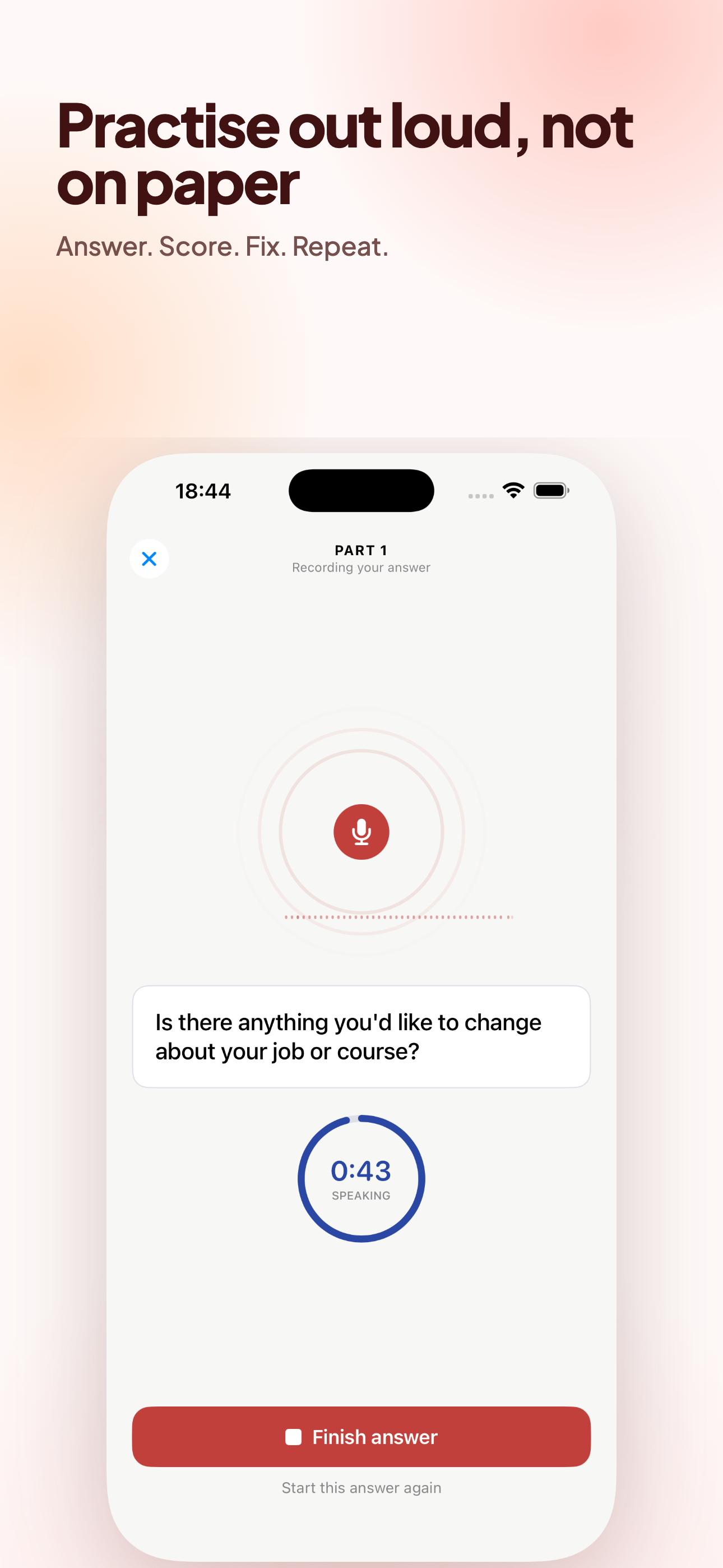
- Record a two-minute answer without trying to improve anything.
- Look at where the pauses land, not how many there are. Mid-clause or at boundaries?
- Count self-repairs. If there are more than two, that is the thing to work on, not vocabulary.
- Re-record the same question, changing only one thing: pause before starting each sentence rather than during it.
- Compare the two on words per run.
That single change - moving the hesitation from inside the clause to before it - usually moves the measurement more than a month of general practice, because it is the difference the criterion is built to detect.