Four things decide whether you see the aurora, in this order of importance: darkness, cloud, location, and geomagnetic activity. The last is the one everyone plans around, and it is the one you can do least about.
Season: it is about darkness, not cold
The aurora happens year-round. It is simply invisible when the sky is not dark.
In the far north, summer nights never get dark at all - from roughly May to early August there is nothing to see regardless of activity. The viewing season is therefore late August to mid-April, and the practical window is September to March.
Two months deserve special mention. September and March sit near the equinoxes, when geomagnetic storms are statistically more frequent - an effect called the Russell-McPherron mechanism, and it is real in the data. They also have milder weather and more comfortable hours of darkness than midwinter.
December and January give the longest nights and the worst weather in most aurora destinations. Longer darkness is no help under continuous cloud.
Time of night: narrower than people expect
Activity peaks around magnetic midnight, which for most northern European locations falls between roughly 10pm and 1am local time.
This does not mean nothing happens outside that window - substorms occur at all hours - but if you are choosing when to stand outside in the cold, that is the window. Plenty of people give up at 9pm.
The other habit worth having: go out and look, repeatedly. Displays build and fade over minutes. A sky that is empty at 11:15 can be full at 11:40, and the only way to catch that is to keep checking rather than deciding based on one look.
Cloud: the thing that actually ruins trips
This is the answer to why people go to Tromsø for a week during high activity and see nothing.
The aurora is above 100 km. Cloud is below 10 km. Any cloud at all and the display is happening perfectly well where you cannot see it.
Which means the single most useful skill is reading a cloud forecast and being willing to drive. In northern Norway, Finland and Iceland, conditions vary enormously over fifty kilometres - a clear patch inland while the coast is covered is entirely normal, and the people who see the aurora are the ones who moved.
Practical consequences for planning:
- Stay somewhere with a car, or book tours that chase clear sky rather than driving to a fixed spot.
- Give yourself several nights. Three is a minimum; five or more makes a bad week survivable.
- Consider inland over coastal. Coastal weather is more changeable. Inland Finnish Lapland has more clear nights than the Norwegian coast, at the cost of being colder.
Location: the oval, not the latitude
The aurora forms a ring around the magnetic pole, not the geographic one. That ring - the auroral oval - is why Tromsø at 69°N is excellent and places at the same latitude in Siberia are less reliable.
The practical version: you want to be under the oval, not merely far north. During quiet conditions the oval sits over northern Scandinavia, Iceland, northern Canada and Alaska. During a strong storm it expands south, which is when the aurora becomes visible from Scotland or the northern United States.
Being directly under it also changes what you see. From far south, the aurora is a glow on the northern horizon. From under the oval it is overhead, moving, and the experience is not comparable.
The forecast, and how to read it properly
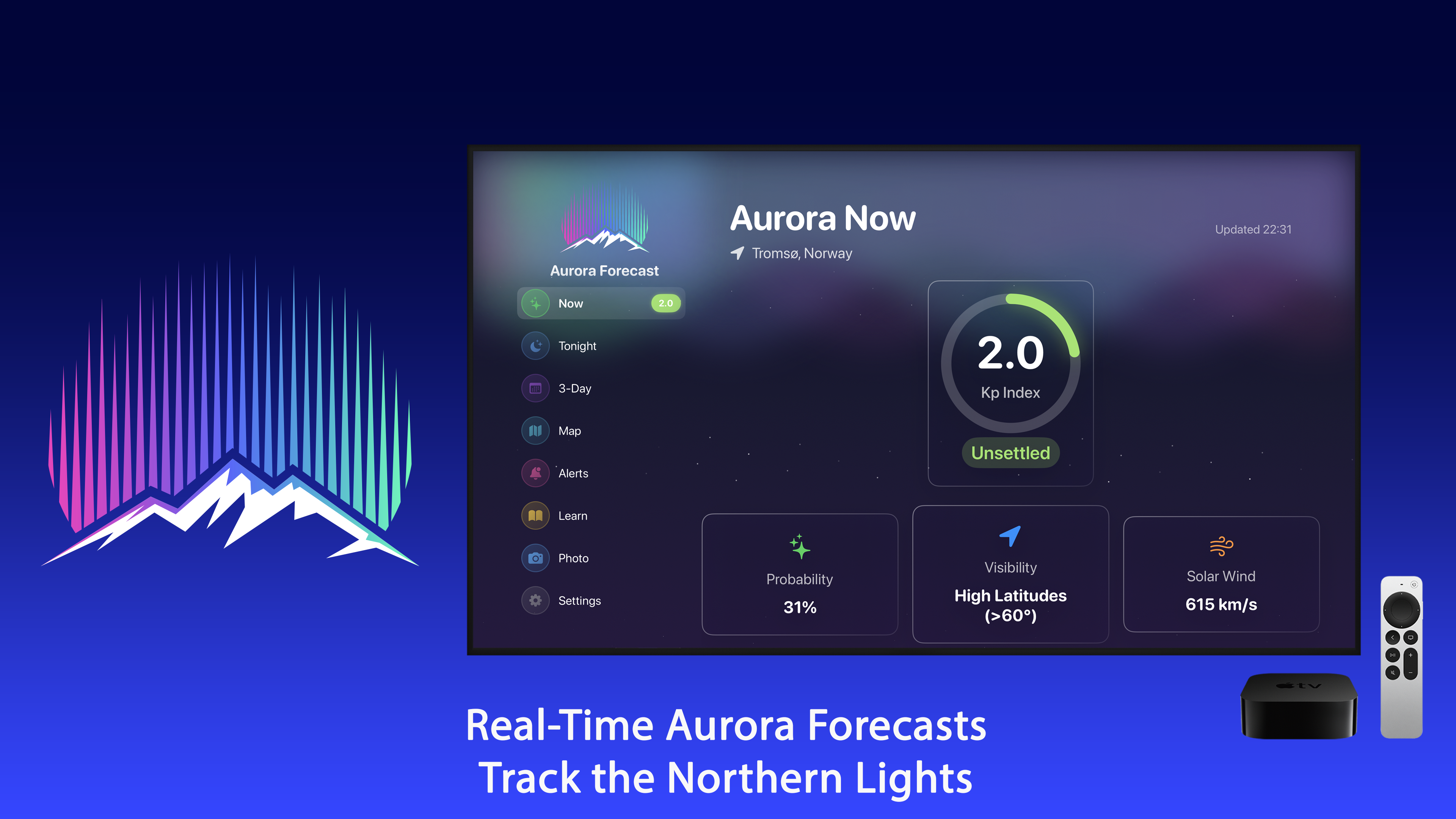
The KP index runs 0 to 9 and describes global geomagnetic disturbance. It is useful and it is coarse - a three-hour average of a planet-wide measurement, which tells you very little about the next twenty minutes above your head.
Two better habits:
Watch the oval map rather than the number. It shows where activity actually is, which is the question you have.
Use the short-range indicators for the next hour. Solar wind speed and the Bz component - when Bz turns southward, activity tends to follow within about half an hour. That is the closest thing to a real-time signal.
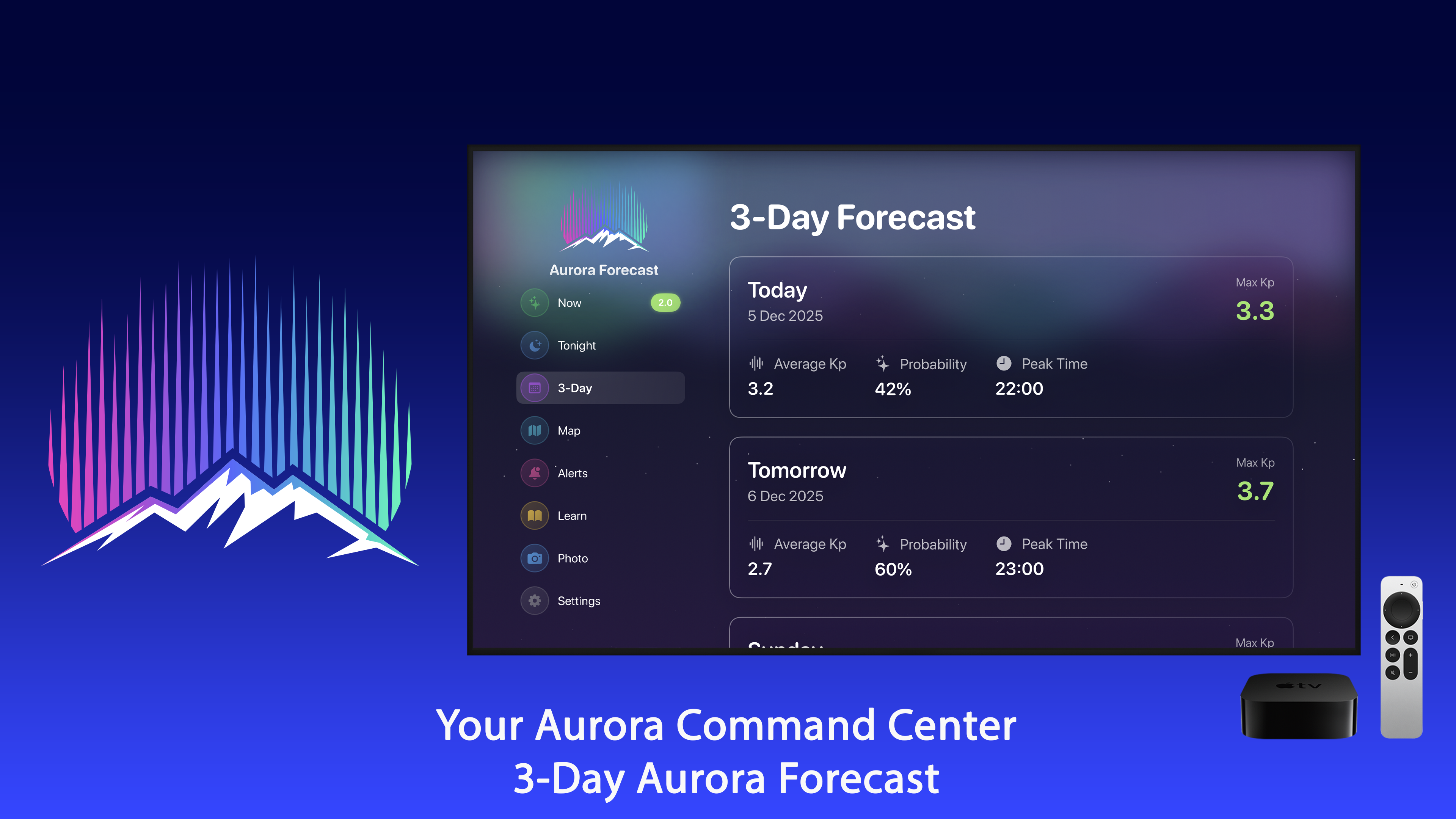
Aurora Forecast keeps the oval and the index on your phone and on the Apple TV, which mostly solves the remembering-to-check problem - and it can warn you while the solar wind is still 30 to 90 minutes out.
We went deeper into the index itself in what KP actually means for aurora chasers, including why a high number in the wrong place gets you nothing.
If you are planning a trip
- Pick September, October, February or March over midwinter.
- Book five nights or more, somewhere under the oval.
- Arrange transport that lets you drive away from cloud.
- Plan to be outside between 10pm and 1am, checking every twenty minutes.
- Watch cloud forecasts daily and the aurora forecast hourly - in that order of importance.
The trip-planning specifics for Iceland in particular are in our piece on planning around the weather there, which is a country where the driving-to-clear-sky point matters more than almost anywhere.