Where the fuel goes
An engine burns more fuel the harder it works. Climbing a hill means lifting the whole vehicle against gravity, so a climb costs fuel whatever you do. What you control is how much you waste on top of that:
- Wheelspin - power that spins the tyres instead of moving you forward.
- Hard acceleration - speed you gain only to brake away again at the next crest.
- Stopping on a slope - getting moving again uphill costs far more than keeping going.
Momentum is stored fuel
Speed you carry into a hill is energy you already paid for. A vehicle that arrives at the bottom of a climb with momentum uses it to get part of the way up without extra throttle. Drivers who save fuel on real hilly roads do the same: build a little speed before the hill and ease off over the top, rather than accelerating hardest on the steepest part.
The flip side is that braking throws momentum away. Every time you have to brake hard before a crest because you arrived too fast, you have wasted the fuel that got you to that speed.
A steady foot
In a game with a fuel gauge, the habits are simple:
- Pick a pace you can hold, rather than flat out.
- Ease off before crests, so you do not launch into the air and lose time and control.
- Keep moving on climbs; never stop halfway up.
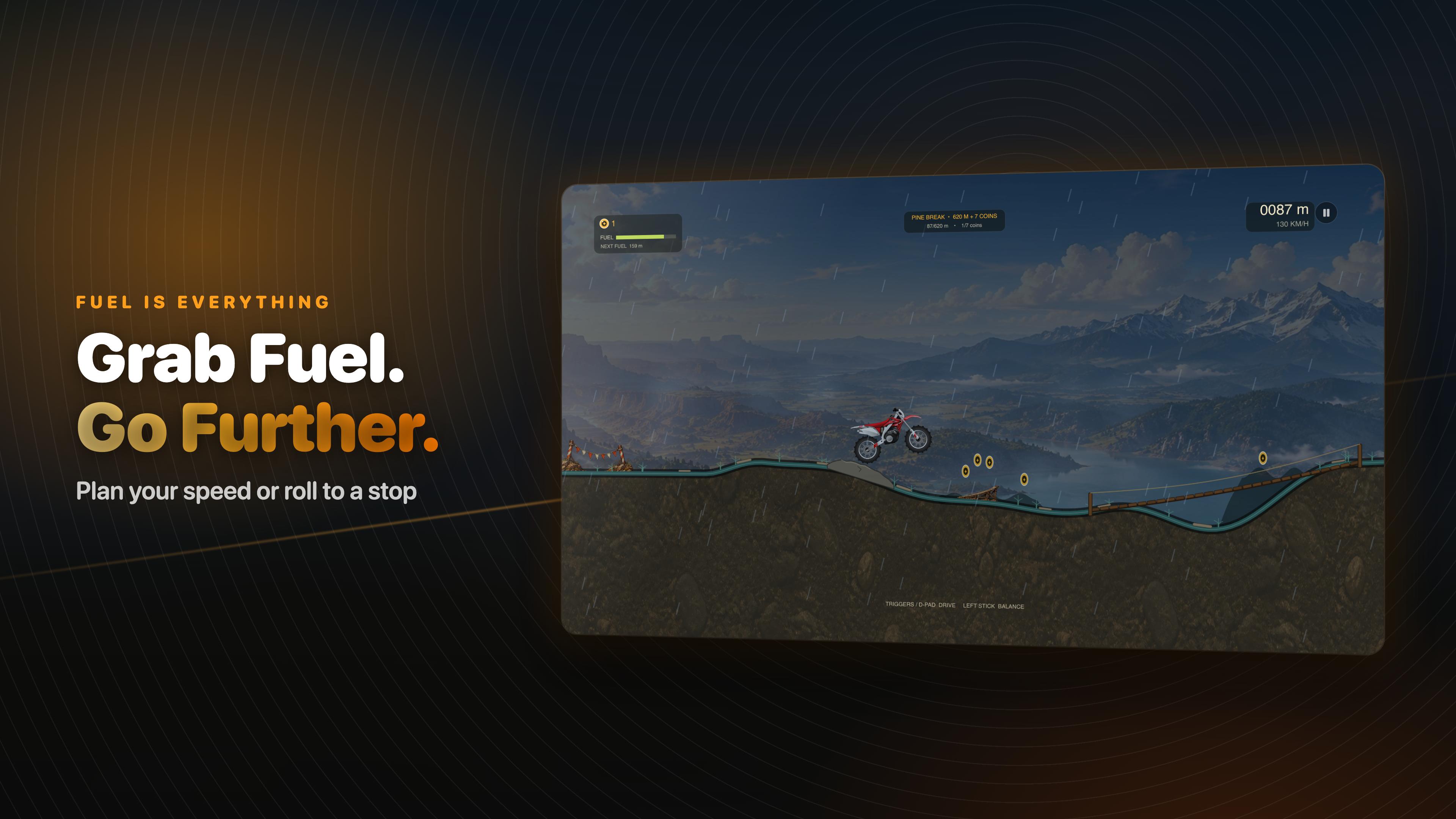
- Plan your speed around the fuel cans - know where the next one is.
- If a route keeps running you dry, upgrade the fuel system or choose a vehicle with more range.
Fewer flips is a fuel saving too: a run that ends upside down never reaches the next can. See hill-climb driving tips.
In Dirt Climb
In Dirt Climb the tank is always running, fuel cans wait along each route, and every vehicle shows its fuel range in the garage. Each vehicle has its own fuel economy, and the fuel system upgrade adds range per tank. One of the career contracts asks you to finish with fuel to spare - which is exactly where a steady foot pays off.